March 18, 2023

Angel Hernandez Is In Mid-Season Form (I Count 27 Missed Calls)

March 17, 2023

WBC: Japan (5-0) Advances To Semifinals, Outscoring Opponents 47-11

The champion of the fifth World Baseball Classic tournament will be crowned next Tuesday. Right now, six teams remain in contention.

Cuba and Japan have advanced to the semifinals. Their opponents will be determined tonight and tomorrow. All of the remaining games are in Miami and will start at 7 PM ET.

Puerto Rico and Mexico meet tonight; the winner will play Japan on Monday. Puerto Rico is without closer Edwin Díaz, who tore the patellar tendon in his right knee during the celebration after Wednesday's win against the Dominican Republic. The starting pitchers are Marcus Stroman of the Cubs (PR) and Julio Urías of the Dodgers (Mexico). Mexico's Randy Arozarena is crushing the ball: 7-for-14 (.500/.632/1.071), with one home run, five doubles and nine RBIs. [UPDATE: Mexico won 5-4.]

The United States and Venezuela square off on Saturday, with the victor playing Cuba the following day. Lance Lynn will start for the US. The winners of the two semifinal games will battle on Tuesday for the championship.

Last night, Japan topped Italy 9-3. Kazuma Okamoto drove in five runs with a three-run homer and a two-run double. He also walked twice. Munetaka Murakami went 2-for-3 and scored three runs.

Shohei Ohtani (4.2-4-2-1-5, 71) went 1-for-4 and scored two runs – and threw the fastest pitch (102 mph of his career. Yu Darvish pitched two innings of relief, his first relief stint since he was 23 years old and pitching for the Nippon-Ham Fighters 13 years ago.

Red Sox outfielder Masataka Yoshida homered, drove in two runs and scored twice. In five games, he's 6-for-15, with 10 RBI. His 1.189 OPS (.400/.522/.667) is fifth-best among players with five games played. In 23 plate appearances, he has not struck out.

Japan (5-0) has outscored its opponents 47-11. They lead all teams with a .475 OBP and a .996 OPS and also have stolen a tournament-high eight bases. The pitching staff has a puny 1.80 ERA and is allowing an average of five hits and one walk per game (26 hits, five walks).

The Eight Quarterfinal Teams

              G   RS   RA    DIFF
Japan        5   47   11    + 36
Puerto Rico 4  30   12  + 18
Venezuela    4   23    9    + 14
Mexico     4   27   14    + 13
Cuba      5   29   18  + 11
USA    4   26   16    + 10
Australia   5   32   23    + 9 [eliminated]
Italy    5   23   26    - 3 [eliminated]

Japan has finished as one of the top four teams in all four previous WBC, winning the first two in 2006 and 2009 and finishing third in 2013 and 2017. No other country/team has finished in the Top 4 more than twice. The Dominican Republic won the 2013 title and the US won in 2017.

If Japan advances to Tuesday's championship game, Ohtani would be on four days rest.

March 16, 2023

Everyone Loves A Contest #29: 2023 Red Sox W-L Record

The 2023 Red Sox season begins at Fenway Park in two weeks – Thursday, March 30 – so it's time to  open up the annual Red Sox W-L Contest!

The person who correctly guesses the Red Sox's 2023 regular season W-L record will win . . . a book of your choice. Baseball, history, cooking . . . whatever . . . up to a price of US$25 (or a little over, if necessary).

Contest entries must be emailed to me by the deadline (see below) and include the following three predictions:
1. 2023 W-L Record
2. Tiebreaker: Time of Boston's Quickest Nine-Inning Game
3. Tiebreakest: Masataka Yoshida's On-Base Percentage

The winning W-L prediction must be exact, of course. The tiebreaker(s), if needed, will be the closest guess, either over or under. (The game times likely will be within a tight range, so we'll have a second tiebreaker.)

Deadline: Wednesday, March 29, 11:59 PM ET.

Good luck . . . and don't forget: Yankees suck!

February 28, 2023

Closed Until March 11

I will be away from my desk until March 11 . . .

. . . although with the infrequency of my posts, you might never have noticed.

February 26, 2023

MLB's New Reality

February 23, 2023

In Case You Were Wondering:
Yes, Curt Schilling Is Still A Vile Person Overflowing With Hate & Mind-Numbing Stupidity

Have you been wondering if Curt Schilling is still a vile racist transphobic boneheaded Nazi sympathizer who harrasses school shooting survivors and thinks lynching journalists would be "awesome"?

Well, you're in luck because I have the answer.

Yes! The transphobic former ESPN employee, the welfare queen who was given $75 million of Rhode Island taxpayers' money and pissed it all away because he's a incompetent businessman, and the sedition-promoting cheerleader for white supremacists continues to broadcast his stunning ignorance into any available open microphone. 

And now this proud member of the QAnon Cult, who promoted Steve Bannon's plan to scam $25 million from MAGA donors, who publicly defended Trump after video surfaced of the serial rapist hitting on a 10-year-old girl (and appeared to admit to ogling his 14-year-old daughter's friends in the process), and the guy who is clueless and terrified of science and logic, is now posing as a historian and foreign policy expert on Fox.

Quoting a few comments to this tweet: "Zelensky is Mussolini seems a stretch" . . . "Did he go through a DeSantis school system?" . . . "Schilling shilling for Putin".

Outkick, which is owned by Fox Corp., has hired the guy who no longer trusts Fox's (his employer) news reporting because the network has "headed to the FAAAAAR left". He will host The Curt Schilling Baseball Show, which describes itself thusly: "Questioning the consensus and exposing the destructive nature of 'woke' activism, OutKick is the antidote to the mainstream sports media that often serves an elite, left-leaning minority instead of the American sports fan."

Maybe Aubrey Huff can be his guffawing sidekick cough-talking racial slurs in the background. 

So why has Schilling agreeed to work for a "FAAAAAR left" company? Isn't he a massive hypocrite for doing that? (Again, yes.)

On Thursday, Eric Hananoki of Media Matters posted a voluminous collection of hateful and stupid postings from Schilling, who self-identifies as a Christian (although when he recently tweeted "Biden is Hitler", he was a Jew).

When I first read these, I thought they were from the teachings of Jesus. You might be mistaken, too.

Schilling's conspiracy theories: QAnon, school shooting conspiracy theorist, "the global vaccine hoax"
Schilling endorsed and promoted the QAnon conspiracy theory in a 2018 Facebook post, writing of a QAnon video: "I started to research this about a month ago and was sent this today. You will not be able to stop watching once you start." He has also worn a QAnon shirt with its slogan while doing Facebook videos.

Schilling promoted the conspiracy theory that the mass shootings in Parkland, Florida, and Sandy Hook, Connecticut, were hoaxes. On February 26, 2018, he shared a link to a now-deleted article which embedded text that called Sandy Hook a "hoax" and purportedly included videos which "contain eyewitness testimony that prove the Parkland High School shooting did not happen as they told us." Schilling defended himself in the comments section from criticism, saying, "Tell me something doesn't seem weird?"

Schilling shared a now-deleted thread from a Parkland conspiracy theorist who claimed that "this stinks to high heavens" and "why are the interviews that do NOT agree with the one shooter or the narrative that CNN is pushing being heard?" On Twitter, he also promoted a conspiracy theory falsely claiming that Parkland mass shooting survivor David Hogg was a supposed crisis actor.

Schilling is an election denier who has defended the January 6 insurrectionists and called for the country to "Declare Martial Law, arrest the liars (Schiff, Pelosi, Shumer) the treasonous idiots (Schiff, Clinton) and put them on trial AND a complete re-vote." He has pushed the conspiracy theory that Dominion helped steal the 2020 election.

Schilling tweeted that the Democratic National Committee "murdered Seth Rich."

Schilling has promoted the conspiracy theory that the Clintons have murdered numerous people.

Schilling called the COVID-19 vaccine "the global vaccine hoax that's killing people."
Schilling repeatedly expressed dislike for Outkick's owners and corporate cousin Fox News
Schilling has frequently tweeted his dislike of the majority of Fox News and the Murdochs. Here are numerous examples from his Twitter account:

"I said it before, the Murdoch sons are HARD CORE Hollywood liberals. Once dad was out of the picture the transformation began." [September 16, 2020] "Not really considering the murdoch children are hard core hollywood liberals. Only a matter of time. IMO it's time we @BreitbartNews started our own news channel." [November 27, 2018]

"Tonight put me over the hump. Fox has joined the gaggle of things I cannot trust to be objective. No worries, just disappointing." [November 6, 2018] "Fox is also a very involved member of the Fake News crowd ICYMI." [September 14, 2018]

"Think about this conceit. Rupert Murdoch thinks he matters enough that him wanting someone gone from the WH is actually news." [August 15, 2017]

"I've pretty much stopped caring what they think. Outside of Kilmeade, Carlson and Baier they are headed to the FAAAAAR left." [August 23, 2017]
Schilling's bigotry: Anti-trans and anti-Muslim posts; blaming Black people for slavery in the U.S.
Schilling was fired from ESPN for promoting an anti-trans post in 2016 "which had a man in ripped women's clothes under a caption that read: 'Let him in to the restroom with your daughter or else you're a narrow minded, judgmental, unloving, racist bigot who needs to die!'"

Schilling has repeatedly demonized Muslims as killers and compared them to Nazis.

Schilling on slavery: "African slavery was created by blacks, on blacks, to blacks, for blacks. They were sold by blacks, to blacks, and to whites."

Schilling has called Jewish philanthropist George Soros "the puppeteer of the Democratic party." (There is a long and violent history related to the antisemitic puppet master trope.)

Schilling compared conservatives to Jewish people in 1930s Germany, tweeting: "Biden is Hitler mid 1930s rousing the German people on the evils of the Jewish people. With 'Jew' being the modern-day conservative American who believes in God and Country (regardless of sex, creed or color mind you)."

Schilling promoted a large collection of Nazi memorabilia on Facebook in August 2015.

February 21, 2023

Cool Babe Ruth Facts


[As promised, here is the "Cool Babe Ruth Facts" section from The Babe, published in 2019 by the Society for American Baseball Research.]

After years of looking at Babe Ruth's career statistics – both for research and for pleasure – I have come to the inescapable conclusion that the man considered by many as the greatest player in the history of the sport is wildly underrated. The more you learn about Ruth – his life on and off the field – the more unbelievable and improbable his story becomes. It becomes increasingly difficult to comprehend the fact that he truly existed.

What follows are some Ruth statistics and factoids I have gathered over the years, both from my own research and curiosity and from other sources, including Ryan Spaeder's "The Ace of Spaeder". All statistics are from Baseball Reference. The statistics in the yearly charts begin with 1918 because that was the first season Ruth began playing in the field every day.

CAREER SPLITS


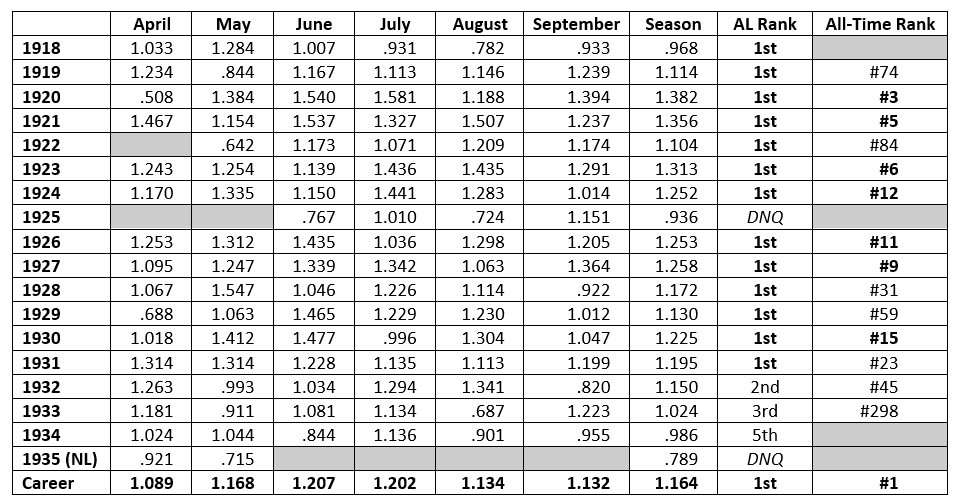
OPS BY MONTHS


DNQ: Did Not Qualify (not enough plate appearances to be listed among league leaders)

September 1925 to August 1932: Ruth posted an OPS over .900 in 41 of 42 months, over eight seasons. In the lone month his OPS was below .900 (April 1929), he played in only 10 games. It was, of course, a momentarily slip. Ruth batted .376 .467/.738 over the next two months.

In nearly half (45) of the 93 months that Ruth was a full-time outfielder for the Red Sox and Yankees (1919-34, 16 seasons), his OPS topped 1.200, including 13 months over 1.400.

OPS AGAINST AL TEAMS


1920: Ruth's worse slugging percentage against any team was .720 against the Senators. That percentage was still at least 88 points higher than any other player in the majors. His worst on-base percentage (.473, also against the Senators) would have finished third in the AL.

1922: Ruth had a .605 on-base percentage against the Red Sox, reaching base 26 times (12 hits, 14 walks) in 43 plate appearances. . . . Ruth went 20-for-50 against the Athletics, with 7 singles, 3 doubles, 1 triple, and 9 home runs.

1930: Ruth had a 1.585 OPS against the Tigers, with 16 of his 28 hits going for extra bases.

OPS SPLITS

Data for these splits not available before 1925.
        
Data for these splits not available before 1925.

FACTOIDS

Babe Ruth would have to go 0-for-1501 for his career OPS (1.164) to fall below 1.000.

Only 25 players in history finished their careers with a slugging percentage over .550. Ruth would have to go 0-for-2135 for his career slugging percentage to fall below .550.

Barry Bonds has the fifth-best slugging percentage of all-time (.607). To topple Ruth's .690 slugging percentage from the #1 spot, Bonds would have to hit 247 consecutive home runs. OR if Ruth went 0-for-1147, his slugging percentage would drop below Bonds's .607.

Ruth had three seasons with a .375+ batting average, .500+ on-base percentage, and .750+ slugging percentage. No other player in history has had even one season with those numbers. In fact, only four players have had even one season with any two of those benchmarks.

.375 batting average and .500 on-base percentage
Babe Ruth, 1920:       .376  .532  .847
Babe Ruth, 1921:       .378  .512  .846
Babe Ruth, 1923:       .393  .545  .764
Babe Ruth, 1924:       .378  .513  .739
Rogers Hornsby, 1924:  .424  .507  .696
Ted Williams, 1941:    .406  .553  .735
Ted Williams, 1957:    .388  .526  .731
.375 batting average and .750 slugging percentage
Babe Ruth, 1920:       .376  .532  .847
Babe Ruth, 1921:       .378  .512  .846 Babe Ruth, 1923:       .393  .545  .764 Rogers Hornsby, 1925:  .403  .489  .756
.500 on-base percentage and .750 slugging percentage
Babe Ruth, 1920:       .376  .532  .847
Babe Ruth, 1921:       .378  .512  .846
Babe Ruth, 1923:       .393  .545  .764
Barry Bonds, 2001:     .328  .515  .863
Barry Bonds, 2002:     .370  .582  .799
Barry Bonds, 2004:     .362  .609  .812
Ruth had seven seasons with at least a .350 batting average, .480 on-base percentage, and .730 slugging percentage. Everyone else in baseball history – more than 22,000 players – has combined for only five such seasons.
Babe Ruth, 1920:       .376  .532  .847
Babe Ruth, 1921:       .378  .512  .846
Babe Ruth, 1923:       .393  .545  .764
Babe Ruth, 1924:       .378  .513  .739
Babe Ruth, 1926:       .372  .516  .737
Babe Ruth, 1927:       .356  .486  .772
Babe Ruth, 1930:       .359  .493  .732
Rogers Hornsby, 1925:  .403  .489  .756
Ted Williams, 1941:    .406  .553  .735
Ted Williams, 1957:    .388  .526  .731
Barry Bonds, 2002:     .370  .582  .799
Barry Bonds, 2004:     .362  .609  .812
Note: Ted Williams did it twice, at ages 22 and 38!

* * *

In 276 games from May 11, 1920 to October 2, 1921, Ruth batted .388.

In 250 games from April 30, 1923 to August 8, 1924, Ruth batted .402.

In 162 games from July 24, 1927 to July 30, 1928, Ruth hit 71 home runs.

Only 11 players in history have had even one season with an OPS+ of 206 or better. That is Ruth's career average.

Ruth's first season in New York started slowly. In 1920, after 18 games, he was batting .210 and slugging only .371. On May 11, everything clicked. Ruth batted .403/.564/.924 (1.488 OPS) for the remaining 124 games of the season. He reached base by either a hit or a walk in 121 of those 124 games. There were 33 games in which Ruth did not get a hit, but his on-base percentage in those games was still .326, thanks to 42 walks.

Ruth finished the 1920 season with 54 home runs, outhomering all but two teams. The Phillies hit 64 and the Yankees (minus Ruth's total) hit 61.

The original Yankee Stadium was known as "The House That Ruth Built", but the Babe must have been sad to say good-bye to the Polo Grounds. In 1920, he slugged .990 at his home park in upper Manhattan. More than two-thirds of his hits went for extra bases (56 of 81, 69%) and he hit more home runs (29) than singles (25).

In 1921, Ruth slugged .926 at the Polo Grounds, with 63 of his 103 hits (61%) going for extra bases, including 32 home runs.

Over the 1920 and 1921 seasons, Ruth slugged .847. On the list of players with at least 600 plate appearances over those two seasons, Rogers Hornsby (at #2, .599) was closer to #105 than he was to #1.

Over the 1920 and 1921 seasons, Ruth hit 113 home runs. Tillie Walker had the second-most home runs, with 40. Bob Meusel was third, with 35. Ruth outhomered 10 major league teams over those two seasons. The Red Sox, for whom Ruth had played before 1920, hit a total of 39 home runs in those two seasons.

On June 11-14, 1921, Ruth went 8-for-12 in a four-game series against the Tigers, with two doubles and six home runs. Ruth scored nine runs and drove in 12. He walked six times and struck out only once in 18 plate appearances. His OPS for those four games was 3.111. He also stole a base . . . and he pitched five innings in the third game of the series and picked up the win. Ruth hit more home runs in those four games than any Red Sox batter hit in the entire season. Del Pratt led the Red Sox with five home runs and Shano Collins hit four. Ruth set a new single-season record – for the third consecutive year – with 59.

On August 31, 1923, Ruth's batting average was .405. He finished the season at .393. Just four more hits – one additional hit every six weeks – would have given him a .400 average. Ruth's OPS dropped below 1.120 on only three days (May 13, 14, 16). Ruth's on-base percentage never dropped below .484. It was below .500 on only eight days (all between May 14-22)

In Ruth's first five seasons with the Yankees, he led the majors in RBI three times. He drove in 653 runs in 709 games, more than 100 more RBI than any other player (Highpockets Kelly knocked in 562 runs in 744 games.) Yet in those five seasons, there were only three games in which Ruth had more than four RBI – and only 26 games (out of 709, 3.7%) with more than three RBI.

In 1930 and 1931, Ruth had 315 RBI in 290 games, but collected more than 3 RBI in any single game only eight times.

Ruth had only 28 games in his career with five or more RBI. That seems low, especially when I  found out Lou Gehrig had 41 such games. But among the all-time leaders in career RBI, Ruth's total was not unusual. Hank Aaron had 22 games with five or more RBI, Ted Williams had 24, Alex Rodriguez had 29, Barry Bonds had 23. Stan Musial had only 12 (and only two games with more than five RBI).

Babe Ruth had six seasons with an OPS over 1.250. Only two other players in history have had even one.

Babe Ruth
1920:  1.379
1921:  1.359
1923:  1.309
1924:  1.252
1926:  1.253
1927:  1.258
Barry Bonds
2001:  1.379
2002:  1.381
2003:  1.278
2004:  1.422
Ted Williams
1941:  1.287
1957:  1.257
Ruth holds eight of the top 17 spots on the Best Single-Season OPS+ list (1901-2018). The only three players with more than one season in the Top 20:
Babe Ruth       8  (1919, 1920, 1921, 1923, 1924, 1926, 1927, 1931)
Barry Bonds     4  (2001, 2002, 2003, 2004)
Ted Williams    2  (1941, 1957)
Bonds's top nine seasons: 1st, 2nd, 3rd, 9th, 30th, 37th, 89th, 90th, 120th.
Ruth's top nine seasons: 4th, 5th, 6th, 10th, 11th, 15th, 16th, 17th, 23rd.

In the five seasons from 1919 to 1923, only 11 players hit more than 50 home runs. Ruth hit 218.

Home Runs, 1919-1923 (5 Seasons)
Babe Ruth           218
Cy Williams         109
Ken Williams        108
Rogers Hornsby       97
Tillie Walker        89
Harry Heilmann       75
High Pockets Kelly   68
The average American League team (not including Ruth's team in each season) hit 238 home runs.

Home Runs, 1919-1927 (9 Seasons)
Babe Ruth           396
Rogers Hornsby      198
Cy Williams         194
Ken Williams        185
Home Runs, 1920-31 (12 seasons)
Babe Ruth           562
Rogers Hornsby      268
Lou Gehrig          233
Cy Williams         202
All-Time Home Run List, When Ruth Retired In 1935
Babe Ruth         714    1914-35
Lou Gehrig        378    1923-35  (Final season, HR total: 1939, 493)
Jimmie Foxx       302    1925-35  (Final season, HR total: 1945, 534)
Rogers Hornsby    300    1915-35  (Final season, HR total: 1937, 301)
Al Simmons        256    1924-35  (Final season, HR total: 1944, 307)
Cy Williams       251    1912-30
Hack Wilson       244    1923-34
Mel Ott           242    1926-35  (Final season, HR total: 1947, 511)
Chuck Klein       232    1928-35  (Final season, HR total: 1944, 300)
Goose Goslin      218    1921-35  (Final season, HR total: 1938, 248)
Jim Bottomley     206    1922-35  (Final season, HR total: 1937, 219)
Ken Williams      196    1915-29
Gabby Hartnett    189    1922-35  (Final season, HR total: 1941, 236)
Harry Heilmann    183    1914-32
In 10 World Series, Ruth batted .326, slugged .744, and hit 15 home runs. He also pitched 31 innings with a 0.87 ERA.

Ruth had a combined pitcher and position player career WAR of 183.6, which is 1.3 more WAR than Derek Jeter & Tom Seaver combined.

Ken Griffey Jr. batted .284/.370/.538 over his career.
Ruth batted .314/.382/.534 in the 163 games in which he pitched.

Ruth was the youngest player in history with at least 40 home runs & 120 walks in a season (1920, 25 years old, 54 homers, 150 walks) until Bryce Harper (2015, 22 years old, 42 homers, 124 walks).

Ruth stole home 10 times, more than Rickey Henderson, Lou Brock, & Tim Raines combined (9).

Ruth is the only player in history to hit grand slams in consecutive games . . . twice.
September 27, 1927 off Lefty Grove (Athletics)
September 29, 1927 off Paul Hopkins (Senators)

August 6, 1929 (G2) off Bobby Burke (Senators)
August 7, 1929 (G1) off Howard Ehmke (Athletics)
Ruth is the only player to hit three home runs in a World Series (or any postseason) game . . . twice (1926 World Series, Game 4; 1928 World Series, Game 4).

Ruth's 659 home runs with the Yankees is still the all-time record for home runs with a single team.

Ruth hit 259 home runs in the original Yankee Stadium. Only Mickey Mantle hit more (266), but he needed six additional years to hit seven more homers (18 seasons to Ruth's 12).

When Ruth played his last game for the Yankees in 1934, he had hit 28.3% of all home runs in Yankees history.

Ruth's 847 slugging percentage in 1920 was the single-season record for 80 years, until Barry Bonds slugged .863 in 2001.

Ruth walked 170 times in 1923, which was the most in any season until Bonds had 232 walks in 2004.

Ruth still holds the record for the most extra-base hits in a season, with 119 in 1921 (44 doubles, 16 triples, 59 home runs).

Ruth still holds the single-season record for total bases, with 457 in 1921.

Ruth is the all-time leader in Isolated Power (.348), which is basically slugging percentage minus batting average. It measures how many extra bases a player averages per at-bat. Mark McGwire is second, at .325.

In 1923, Babe Ruth reached base by hit, walk, or hit by pitch 379 times, which is still the all-time record.

Most Times On Base (H, BB, HBP), Season
Babe Ruth       1923    379
Barry Bonds     2004    376
Billy Hamilton  1894    362
Ted Williams    1949    358
Barry Bonds     2002    356
Babe Ruth       1921    353
Babe Ruth       1924    346
Ted Williams    1947    345
Ruth holds the all-time record for games with two home runs (70).
Games with 2 HR: Ruth (70), Barry Bonds (67), Sammy Sosa (63), Mark McGwire (62), Hank Aaron (61), and Willie Mays (60).

Ruth holds the all-time record for games with two or more home runs (72).
Games with 2+ HR: Ruth (72), Barry Bonds (71), Sammy Sosa (69), Mark McGwire (67), Willie Mays (63), and Hank Aaron (62) and Alex Rodriguez (62).

Ruth has the three of the top four all-time single-season Wins Above Replacement (WAR) totals, as calculated by Baseball Reference: 14.0 in 1923, 12.9 in 1921, and 12.4 in 1927.

Ruth led the major leagues in home runs 11 times, slugging percentage 12 times, OPS 11 times, walks 11 times, on-base percentage 10 times, runs scored eight times, total bases six times, and RBIs five times.

Hank Aaron (755 home runs) hit 41 more homers than Ruth, but had 3,324 more plate appearances. 

Barry Bonds (762 home runs) hit 48 more homers than Ruth, but had 1,983 more plate appearances.

Babe Ruth never went more than two games in his entire career without a hit or a walk. He had two-game droughts – far too small to label a slump – only 21 times. If you exclude his seasons as a full-time pitcher, games in which he pinch-hit or came into the game after it had begun, and games shorter than nine innings, there are 14 instances. From September 21, 1928 to July 31, 1934 – a span of 786 games – Ruth had back-to-back games with no hits and no walks only twice.

Hitting Streaks

Over a period of 90 games in 1920 (May 11 to August 14), Ruth batted .427/.584/.986 (1.570 OPS), with 40 home runs and only 45 strikeouts. 

Similar streaks are littered throughout his entire career, sometimes several of them in one season. The following is only a sampling.

June 1 to July 31, 1920 (63 games): .445/.596/.965 (1.561 OPS); more than twice as many walks (73) as strikeouts (36).

June 9-16, 1921 (eight-game hitting streak): .577/.703/1.538 (2.241 OPS); 15-for-26, with 4 singles, 4 doubles, and 7 home runs; on base 26 times in eight games (15 hits and 11 walks), with only 5 strikeouts.

July 28 to August 25, 1921 (career-high 26-game hitting streak): .483/.610/1.045 (1.655 OPS); 43-for-89, with 8 doubles, 3 triples, and 12 home runs; 35 runs scored, 39 RBI, 29 walks, 10 strikeouts.

August 2 to September 11, 1922 (32 games): .370/.444/.843 (1.287); 33 runs scored, 35 RBI.

May 15 to June 4, 1923 (19 games): .420/.565/.928 (1.493 OPS).

June 30 to July 19, 1923 (22 games): .468/.596/.861 (1.457 OPS).

July 7 to September 1, 1923 (53 games):.460/.585/.864 (1.449 OPS); more extra-base hits (35) than strikeouts (26) (15 doubles, 4 triples, 16 home runs).

July 27 to August 30, 1923 (29 games): .500/.624/.940 (1.564 OPS); 50-for-100, 13 doubles, 9 home runs, 32 runs scored, 32 RBI, 31 walks. (The Yankees went 15-14.)

July 27 to October 7, 1923 (the final 62 games of the season): Ruth batted .423 (91-for-215) and slugged .842, with 62 walks and 37 strikeouts.

Last four games of 1923 regular season: .643/.737/1.500 (2.237 OPS); 14-for-19 PA (9 hits, 5 walks), 9 RBI, 3 home runs, 6 runs scored.

July 6 to August 9, 1924 (38 games): .504/.595/1.015 (1.610 OPS); 114 hits and walks in 170 plate appearances. (This period included hitting streaks of 18 and 12 games.)

May 5-20, 1926 (14 games): 16-for-46 (.348), 4 singles, 1 double, and 11 home runs.

August 26 to September 13, 1927 (18 games): 22-for-70, only a .314 average, but .929 slugging, with 5 singles and 17 extra bases hits, including 12 home runs.

September 6 to October 1, 1927 (last 24 games of season): .393/.491/.978 (1.468 OPS); 35-for-89, 16 home runs, 40 RBI.

May 1-28, 1928 (27 games): .424/.562/1.000 (1.562 OPS); 14 home runs.

June 21 to August 17, 1929 (52 games): .403/.498/.874 (1.372 OPS); 23 home runs and 70 RBI.

May 21-24, 1930 (six games): .522/.621/1.565 (2.186 OPS); 12-for-23, with 8 home runs and 18 RBI.

July 3 to August 28, 1932 (52 games): .427/.577/.805 (1.381 OPS).

July 28 to August 28, 1932 (30 games): .459/.616/.929 (1.545 OPS).

May 28 to June 30, 1933 (34 games): .350/.477/.683 (1.160 OPS).

PITCHING

Ruth finished his career with a 2.28 ERA in 1,221.1 innings pitched. Since Ruth's last game on the mound in 1933, only Mariano Rivera has pitched as many innings with a lower ERA (2.21 ERA, 1,283.2 innings pitched).

While Ruth was rewriting the record book as a hitter for the Yankees – and for almost three decades after he retired – he also held the record for most consecutive scoreless innings pitched in the World Series (29.2, eventually broken by Whitey Ford in 1961). (He once said that was the record he was most proud of.)

Ruth is the only player to have pitched in at least 10 seasons and had a winning record in all of them. (Andy Pettitte of the Yankees would have held the record at 13 seasons if he had retired after 2007. But Pettitte kept pitching and went 14-14 in 2008.)

Among American League lefties with at least 1,000 innings pitched in the 1910s, Ruth had the lowest ERA (2.19) and highest winning percentage (.659). He was tied for fourth in shutouts and was ninth in strikeouts.

Career ERA+
Tom Seaver          127
Juan Marichal 123
Zack Greinke 123
Madison Bumgarner 122
Babe Ruth 122
Bob Feller 122
Don Drysdale 121
Warren Spahn 119
Nolan Ryan 112
Pitching Streaks

July 13 to October 6, 1915: 17 games, 15 starts, 1.67 ERA, 0.994 WHIP, 83 hits allowed (76 singles), .198 opponents average, .148 opponents slugging.

August 12 to September 29, 1916: 15 games, 12 starts, 9 complete games; 0.76 ERA, 0.943 WHIP, 117.2 innings, 10 earned runs, 73 hits allowed (66 singles), .181 opponents average, .149 opponents slugging.

July 11 to September 29, 1917: 21 games, 18 starts, 18 complete games, 2 saves; 1.46 ERA in 166.2 innings, .192 opponents average, .243 opponents slugging.

July 5 to August 31, 1918: 11 starts, 10 complete games, 1.76 ERA, 0.918 WHIP, .184 opponents average, .178 opponents slugging.

September 2, 1915 to June 13, 1917 (66 games): Over 494.2 innings and 1,956 batters, Ruth did not allow a home run. He did hit three homers as a batter during that period, though.

* * *

Ruth never wore the now-famous interlocking NY logo on his jersey. It didn't become a permanent part of the team's jerseys until 1936, two years after Ruth's last season with the team.

In 1936, the year after Ruth's retirement, the Hall of Fame inducted its first five players (Ty Cobb, Honus Wagner, Walter Johnson, Christy Mathewson, and Ruth). Ruth received 95.1% of votes. Eleven of the 226 voters left him off their ballots.

Ruth also had the greatest stationery in baseball history.

Red Sox Hold First Team Meeting In Spring Camp

"It's go time."

Next stop . . . fifth place.

February 19, 2023

RIP Richard Belzer (1944-2023)

"A rooster on acid."

That's how comedian Richard Belzer described his Some Girls-era Mick Jagger impression.


Belzer:
One night I was doing Mick Jagger and I didn't know he was in the audience — that was in the '70s. So I went backstage and the owner of the club said, "Mick Jagger wants to meet you." And I was like, "Humana humana." I went out and sat with him and we just hit it off. He was really gracious . . .
I knew the Belz from his standup in the early-to-mid 1980s, but I suppose he's far better known now for his acting, including 14 years as a cast member of "Law & Order: SVU". According to friend Bill Scheft, Belzer had dealt with "lots of health issues". He "died at home with this family around him. . . . His last words were, 'Fuck you, motherfucker.'"

February 16, 2023

RIP Tim McCarver (1941-2023)

James Timothy McCarver spent well over a half-century in and around major league baseball, as a catcher and broadcaster. He died today in Memphis at the age of 81.

McCarver played 21 seasons over four decades for four teams:

Cardinals (1959-61, 1963-69)
Phillies (1970-72)
Expos (1972)
Cardinals (1973-74)
Red Sox (1974-75)
Phillies (1975-80)

McCarver debuted with the Cardinals at the age of 17 in 1959. Over three seasons, he struggled, going 22-for-101 (.218/.233/.297) in 40 games. After spending 1962 in the minors, he returned to the bigs to stay in 1963. McCarver played in three World Series in five years with the Cardinals (1964, 67, 68), and was on the winning side in the first two. His only "black ink" was leading MLB with 13 triples in 1966.

In 1967, McCarver finished #2 in the NL MVP voting, posting a 136 OPS+ and a WAR of 6.0, his only season over 3.4. Orlando Cepeda, his St. Louis teammate, was the unanimous choice. McCarver surpassed that OPS+ mark in consecutive seasons a decade later (in his mid-30s), with 137 in 1976 and a career-best 145 in 1977. 

His broadcasting career lasted more than 40 years and he called 23 World Series and 20 All-Star Games. From the New York Times obituary:

Known for his shrewd analysis of strategy, his literate use of metaphor and his penchant for predicting what was about to unfold on the field, often correctly, McCarver was sometimes a play-by-play announcer but most often a color man, a role that better suited his gift of gab.

His career spanned more than 30 years, from his start in Philadelphia in 1980, to his famous pairing with the former slugger Ralph Kiner in the Mets’ booth, to his national appearances on four different networks, to stints with the Yankees and the San Francisco Giants.

Throughout, his informed, perceptive and articulate observations of the game were widely admired, and his gravelly tenor with a hint of his Tennessee upbringing in it became one of the game’s most familiar voices.

Like all long-serving talking heads, McCarver had his detractors. Some said he talked too much, belabored the obvious, too often tangled his grammar and was overly thrilled by his own cleverness; examples abounded on a now-defunct web page, shutuptimmccarver.com, and he was mocked on "Family Guy." . . .

But more numerous were those who appreciated his independence of mind and his alertness to situational nuances in the game.

In defiance of a broadcasting norm, McCarver was not averse to criticizing the play of a team that employed him; when he was fired from the Mets job in 1999, after 16 seasons, it was reportedly because of just such candor. . . .

McCarver certainly had his detractors. I was often one of them and the JoS archives are littered with rants against the bizarre, biased, and completely incorrect things McCarver said over the years. Here are some of them:

September 30, 2007: Tim McCarver And Conventional Thinking
October 9, 2008: The Origins Of "Manny Forgot Which Knee Hurt
November 15, 2010: Do Leadoff Walks Lead To More Runs?
July 16, 2011: Is BJ Upton A .300 Hitter? McCarver: "Yes"; Facts: "No"
October 27, 2017: Smoltz: When You Absolutely Need To Score A Run, A Single Is Better Than A Home Run
October 11, 2018: As Tim McCarver Once Said, "Baseball Is A Game Of Inch"

The Times' obituary, written by Bruce Weber, gives the impression that McCarver's "informed, perceptive and articulate observations" were concurrent with the complaints about tangled grammar and banging on about the obvious. That is not completely untrue, but my memories of McCarver split the good and the bad into different time periods.

When he was in the Mets' booth (1983-98), McCarver was the best in the business. No one was remotely as talented. Vin Scully was the only announcer for whom I would watch a game simply to hear him talk (not caring at all about what the teams were doing), but if anyone told me they used to do that for McCarver in the '80s, it would make sense. As I wrote on June 19, 2010:

There was a time when Tim McCarver was the best baseball analyst in the world. He was doing Mets games in the late 80s and he was absolutely brilliant. You tuned in happily, and with the certainty that you would be a smarter fan when the game was over.

Some younger fans no doubt think the previous paragraph is some kind of joke, since McCarver is little more than a punch line at this point, growing weirder and more incoherent as the years go by.

By the time I reconnected with Ol' Second Inning on national broadcasts, he annoyed me, probably because by that time, I knew everything about baseball. I admit that he always had his moments, but his nonsense always stood out for me because: (1) announcers should make a actual effort to not say stupid shit and (2) his percentage of stupid shit steadily increased as time went on. That was before I factored in his poorly concealed anti-Red Sox bias and his longtime crush on Mr. 27.

Tim McCarver's Baseball for Brain Surgeons and Other Fans: Understanding and Interpreting the Game So You Can Watch It Like a Pro, written with Danny Peary and published in 1998, is an extremely solid book, though I have not opened it up in close to 20 years.

While gathering old McCarver posts, I saw this and smiled. From January 25, 2012:

Tim McCarver And Madame Khokhlakov

"I've looked at you a hundred times as you walked by, saying to myself: here is an energetic man who must go to the mines. I even studied your gait and decided: this man will find many mines."

"From my gait, madame?" Mitya smiled.

"And why not from your gait? What, do you deny that it's possible to tell a man's character from his gait, Dmitri Fyodorovich? Natural science confirms it."

Fyodor Dostoevsky, The Brothers Karamazov, page 385

February 15, 2023

"A Jarring And Ugly Solution To A Problem That Barely Exists In The First Place"

Earlier this week, MLB's Joint Competition Committee voted unanimously to ruin the 2023 season by making the extra inning runner rule permanent, further limiting position players from pitching, introducing a pitch clock, banning defensive shifts, restricting pickoff throws, and making the bases bigger.

This idiotic and exasperating clusterfucking comes on the heels of rules limiting mound visits, making intentional walks require zero pitches, tying every manager's hands about how he can use his bullpen, and (I'm not fucking sure about this one) outlawing the fake-to-third-throw-to-first move.

Other than that, it's the same game you've always loved!

Christ, it's so goddamn depressing. After MLB's last-minute announcement that MLBTV subscribers would -- surprise! -- not unable to watch any postseason games (which MLB had promised they would have access to and for which they had already paid). MLB didn't even bother to explain its decision when the Manfred's shit hit the fans. (Hey, you don't like it, go watch the other major leagues!) MLB's silence spoke volumes about how little it cares about the people who support the game.

Jay Jaffe writes about the new rules at FanGraphs (my emphasis):

The 11-member Joint Competition Committee was created as part of last year's Collective Bargaining Agreement. . . . [The] committee gives the players a voice in the form of four player representatives, but they're outnumbered by the six owners on the committee; one umpire is also on the committee as well. . . . Last September, the bloc of players voted unanimously against the banning of shifts and the introduction of the pitch clock, but they were outvoted . . . and both rules will go into effect this season despite their protestations. . . .

In 2022, extra innings plate appearances accounted for 1.32% of all PA, and those against position players made up just 0.37%. The most PA by any player in extras in 2022 was 15, a lead shared by Yandy Díaz and Gleyber Torres, with Aaron Judge, Steven Kwan and José Ramírez next with 14. . . . Judge walked seven times in those 14 PA (six of which were intentional) and Ramírez six times (five intentional). MLB has ripped up up over a century and a half of playing extras under the same rules as the first innings — via Peter Morris' Game of Inches, the first game longer than the regulation nine dates to 1859, 12 years before the founding of the National Association — for this? . . .

[Th]e average extra-innings contest in the three seasons in which the runner-on-second rule has been in place has been 7.7% shorter than such games from 2018 to '19. Furthermore, the frequency of games lasting longer than 11 innings is about one-quarter of what it was in those two pre-pandemic seasons. Amid the invasion of the Manfred Men, we've had just two games go longer than 13 innings, none in 2020 and then one apiece in '21 and '22, compared to 19 in 2018 and 23 in '19. . . .

In the two years before the rule change, teams averaged four games longer than 11 innings per 162-game season. Since the rule was put into place, that's down to one game longer than 11 inning per 162 . . . or one every two months. All told, the rule change amounts to a savings of about 12 innings per team per season, or two innings a month.

MLB is making this stupid fucking rule -- that goes against 150+ years of history -- permanent to save  each team one inning every two weeks!

Jaffe then shows how the rule changes affect strategy and whatnot.

Again, the Manfred Man rule has introduced a whole different ballgame from what we've spent the previous three hours watching. Your mileage may vary as to your feelings on the matter, but to these eyes, it's a jarring and ugly solution to a problem that barely exists in the first place. The players, however, have endorsed this route, and we know managers and executives are on board as well. All of which ought to tell us something about how little they value a given midseason game once nine innings have elapsed: "Win or lose, let's get this over with and go pound that Budweiser." . . .

Limiting the ghastly horror of having a position player pitch an inning to 10-run blowouts will likely  -- according to Jaffe's calculations -- save the average team "a bit more than three innings" per season.

Whoop-de-damn-doo. . . .

Nobody's stats are being distorted to any noticeable degree by this [a concern of players, apparently] . . .

In all, this mostly boils down to much ado about nothing. Taken together, these two rules address what amounted to roughly 2% of all plate appearances in 2022. Somehow, these encounters — most of which occur late at night, after reasonable people have gone to bed — are keeping the commissioner up in the wee hours as he strives to find new places to stick his greasy fingerprints on the game in the name of pace of play. Lucky us.

I'd rather have games end in ties than this extra runner bullshit. Ties after # innings (12?) would be vastly preferred to this garbage. I'd be watching real baseball, at least.

I am truly unable to comprehend why some baseball fans would not be excited by a 16- or 18-inning game. Who sees a tied game in the 20th inning and gets pissed off that it's not over yet?

In recent years, we've seen incontrovertible evidence that morons walk among us. There are a lot of morons out there. But still: How has baseball convinced so many fans that less baseball is better than more?

I received an email about the possible renewal of my MLBTV subscription the other day. If this blog did not exist, would I still renew it? I have not yet come up with a definitive answer.

February 4, 2023

Truck Day

 Truck Day was yesterday.

Next Stop: The Series!!

No, not the World Series.

Are you nuts?

"The Series"!

Woo-hoo.

January 30, 2023

Red Sox Place Four Prospects In The Athletic's Top 100 List (11, 37, 40, 72)

The Red Sox have four players on Keith Law's (The Athletic) Top 100 Prospects list.

Tristin Casas is already in Boston. He put up a solid 113 OPS+ (as did Giancarlo Stanton) in 95 plate appearances last season (.197/.358/.408). Sox Prospects currently estimates Ceddanne Rafaela could arrive in Boston late in 2023, with Marcelo Mayer in late 2024, and Miguel Bleis in 2026.


Age: 20 | 6-3 | 188 pounds | BL TR | Drafted: No. 4 in 2021
Mayer had a tough full-season debut in 2022, as he missed a month with a sprained wrist in the first half and struggled to drive the ball for four or five weeks after he returned, and then fought through some back tightness in July that may also have hurt his power. . . . The good news is despite the injury troubles, he still showed an extremely advanced approach at the plate, even when he wasn't at full strength, and finished strongly in Low A and after an early August promotion to High A, hitting .287/.435/.492 from July 1 through the end of the season. Mayer has a smooth left-handed swing that should get him to plus power when he fills out, with loft in his finish and evident hand strength already.  . . . I haven't seen great bat speed from him . . . he might be a high-OBP, 25+ homer guy who doesn't hit for high averages if that's the case. He's a no-doubt shortstop with great actions and quick hands . . . and a plus arm. . . . [I] think he's going to be a star.
37. Ceddanne Rafaela, CF/SS
Age: 22 | 5-8 | 152 pounds | BR TR | Drafted: International signing in 2017
Rafaela is one of the smallest players on this ranking . . . but he was the big breakout guy in Boston's system this year after he started driving the ball a lot more often and emerged as a potential 70 or 80 defender in center. Rafaela, who was born in Curaçao, swings first and asks questions later, with a very fast bat and excellent bat control that helps him make contact even on pitches out of the zone, although it also leads to a lot of weaker contact on those same pitches. He doesn't miss fastballs and actually hangs in there (pun intended) well on curveballs, but given how high he starts his hands, he doesn't always have time to adjust on other pitches . . . His defense is elite and he's a 70 runner as well, so he doesn't have to hit that much to be a solid big leaguer, and he could be an above-average regular as a low-OBP, 20+ homer guy.
Age: 23 | 6-4 | 252 pounds | BL TR | Drafted: No. 26 in 2018
Casas is a boring prospect, but not in a bad way; he projects as an above-average or better regular at first base and he's ready to take over in Fenway right now, but he doesn't have a huge tool, no 80 power or elite defense and definitely not big speed. He's patient, disciplined, and has very good feel to hit, with hard contact that so far has produced a ton of doubles although there's no real reason to think he can't put more of those balls over the fence. Casas is big and very strong; his swing makes excellent use of his upper and lower half as he rotates his hips to get more power from his legs. . .. He's a first baseman who rakes, and should be the traditional slugger for that position, hitting for some average with a ton of walks and either 40-odd doubles or 25-plus homers.
72. Miguel Bleis, OF
Age: 19 | 6-3 | 170 pounds | BR TR | International signing in 2021
Bleis is still growing into his frame, but shows exceptional ability to handle the bat, with the potential for huge power and lots of hard contact, and has a chance for every tool to end up above-average. He's an outstanding athlete who could stay in center depending on how he fills out and whether he stays an above-average runner. Right now he'll show big raw power, less in games, but it's clearly coming once he gets stronger and perhaps if he cuts down on some of the extra hand movement he has before he gets the barrel moving towards the zone. He needs to be more selective at the plate, with a little more swing and miss and a little less ball/strike recognition than you'd like, but it also comes with the enormous upside. He actually would be a perfect guy for short-season ball this year if that still existed, and I won't be shocked or too dismayed if he struggles early in Low A as an inexperienced 19-year-old. The high-average/25 homer upside is still there.
A commenter on the article provided a helpful list of how many players each team has on the list, along with where its highest prospect ranks. The Dodgers have eight players on the list. Here are the AL East teams:
Baltimore - 6 (top prospect # 2)
New York - 6 (top prospect # 8)
Boston - 4 (top prospect #11)
Tampa Bay - 4 (top prospect #24)
Toronto - 1 (top prospect #47)

January 25, 2023

NESN Admits It Edited Out Loud Boos And Steady Catcalls As John Henry And Chaim Bloom Spouted Epic Levels Of Tone Deaf Bullshit Excuses At Winter Weekend

Many Red Sox fans have been less than impressed with the front office's recent actions. After enduring a dismal 2022 season that resulted in a last-place finish, fans watched Xander Bogaerts leave for San Diego as the team announced an increase in ticket prices.

Last weekend, Red Sox owner John Henry and Chief Baseball Officer Claim Bloom were booed and heckled at the team's Winter Weekend in Springfield, but if the only coverage you saw was NESN, you would not have known that, because the network saw fit to edit out the boos and catcalls.

NESN admitted it, too, although its excuse was as lame as its game production and camerawork (my emphasis).

The show tonight at 8p — as is always the case with television production, we made tweaks where needed to accommodate sound quality in the unique amphitheater environment at MGM and condensing a 90-min period to the hour-long format of the show. With that said, the lion share of the ownership/front office Q&A is included in the show.

John Tomase (NBC Sports) said disgruntled fans "turn[ed] the made-for-NESN event into the woodchipper scene from Fargo":

Simply put, the fans are not having this offseason, not one bit. They booed Henry when he walked onto the stage. They booed chief baseball officer Chaim Bloom when he tried to explain how much better off the team is now than three years ago. They booed the response to a question about the cost of attending a game.

They booed and booed and booed to the point that one attendee described it as "uncomfortable."

If the Red Sox didn't realize the world of hurt they were in with their fans before, it's clear now. The people have spoken. . . .

They directed most of their vitriol at Bloom . . . I believe Bloom believes what he's selling. It's just tough to share his vision, since a club that is effectively replacing Xander Bogaerts with Adam Duvall probably isn't going to improve.

One of the cringiest moments in video posted to Twitter occurred when Bloom tried to explain how far the Red Sox have come since 2020. The fans began booing him almost immediately . . . [H]e shifted to the decision to trade Mookie Betts, using the unfortunate homonym of "big bets" to describe the contract it would've taken to keep him, which led to another torrent of boos. . . .

It was the perfect evening for a franchise riven by dysfunction. The Red Sox have spent all winter in a bubble of their own making, insisting that everything is fine. If they expected a friendly audience on Friday, they encountered a revolt.

These three tweets (h/t Toucher & Rich) show the fans in atttendance were not buying management's bullshit. These tone deaf fuckers yapped about making Fenway Park "accessible" and how important it is to "grow" the next generation of fans and then unhelpfully point out there are a few tickets for every home game that cost only $9.00 . . . blah blah blah . . . It's fucking embarrassing.

Henry: I think the most informed thing I can say is that it's expensive to have baseball players, to have the best —

Audience: BOOOOOOOOOOOOOOOOOOOOOOOOOO!!!!!!!!!!!!! [for 20 seconds]

January 22, 2023

Babe Ruth's 715th Home Run

Babe Ruth's Lost 715th Home Run
By Allan Wood

On April 27, 1969, baseball fans learned that "one of the most hallowed statistics of all sports lore" – Babe Ruth's career total of 714 home runs – would be revised. Leonard Koppett of the New York Times reported on a "forgotten" home run hit by Babe Ruth in the summer of 1918. "It turns out," Koppett wrote, "that Ruth hit 715 home runs, not 714, and starting next year the official records will show that."

This surprising announcement came out of the creation of The Baseball Encyclopedia – the landmark reference work containing, for the first time ever, "a complete record of every man who ever played in a major league game" – which was published later that year, in August 1969.

. . .

From The Babe, published in 2019 by the Society for American Baseball Research in 2019.

My biography of Ruth was also included:


The Ruth bio was originally written for Deadball Stars of the American League (2006). I was asked later on to expand it so his entire career was covered. (No one seemed to care that the lede remained the same, but looking at it now, for the first time in several years, I think the first paragraph should be rewritten.)

I also contributed "Cool Babe Ruth Facts", which was not included on SABR's website. I'll share that complete article in another post.

And here's is one of my favourite Ruth photos, just because:

January 13, 2023

Buster Keaton: The Cameraman (Yankee Stadium, 1928)

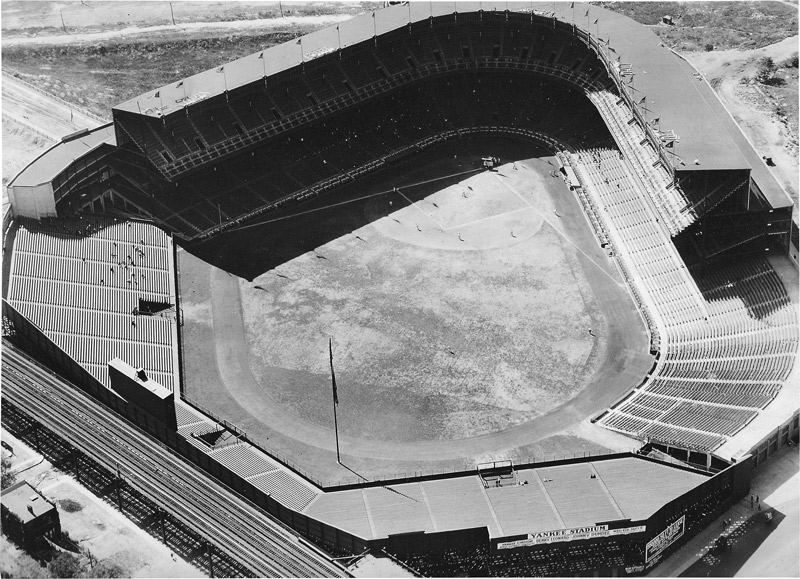
Buster Keaton shows off his baseball moves in an empty Yankee Stadium in the summer of 1928. Keaton's pantomime on the mound is impressive and he hustles around the bases (he was 32 at the time). The distance to the wall in left-center – beyond the flagpole, seen when Keaton enters – was 490 feet from the plate.


This clip is from "The Cameraman", a silent romantic comedy film, starring Buster Keaton and Marceline Day. Day died at age 91 in 2000 (so she was 20 when she made this film). I'm sure she was not the only silent film star to live into the 2000s, but silent movies and any year beginning with a 2 seem like they should be distinct and separate worlds.
The Cameraman was at one point considered a lost film, destroyed in the 1965 MGM vault fire. However, a complete print was discovered in Paris in 1968. Another print, of much higher quality, although missing some footage, was discovered in 1991.
The complete film can be seen here. The baseball clip begins at 15:53.


The New York Times, September 17, 1928:


January 9, 2023

A Belated Happy New Year!

January 5, 2023

Rafael Devers Agrees To 11-Year, $331 Million Extension (2023-33)

UPDATED: Scroll down to sock divider.

One day after the Red Sox and Rafael Devers avoided arbitration with a $17.5 million contract for 2023, here comes the wonderful news that the Boston third baseman has agreed to rip up that deal while the ink is still wet in favour of a massive 11-year, $331 million extension.

Devers will report to camp next month in preparation for his seventh major league season. He will be 26 years old for the entire campaign. As mentioned, this mega-deal wipes away the arb-avoiding stop-gap and so will start in 2023 and take Devers through 2033 (his age-36 season). There are no opt-outs in the contract.

The Red Sox have not officially announced the deal, so it is uncertain whether the extension will begin in 2023 or 2024. MassLive.com writer Chris Cotiilo tweeted: "For CBT purposes, Red Sox could keep Devers' 2023 hit at $17.5M (his agreed upon salary) or fold it in to larger deal ($30.09M for 11 years). It can be done both ways. Haven't gotten an answer on what the plan is (and team officials not confirming deal)."

Jen McCaffrey's article at The Athletic reveals a bit about Devers's mindset and maturity:

But this isn't just about on-field production. The organization is also investing in Devers, the person, someone who's embraced a growing leadership role. A team — especially the Red Sox — doesn't dole out a contract of this magnitude without trusting that Devers will continue to develop into the veteran leader and clubhouse presence he's shown glimpses of becoming in recent years. . . .

Devers has already shown a desire to be more of a force among his peers, something that will be crucial as a new wave of Red Sox talent arrives.

In recent years, Devers has made a concerted effort to learn more English so that he can connect more easily with his English-speaking teammates. It's not something anyone told him to do, but something he took upon himself, knowing what it would mean for his career and the unity of the team.

Devers had a breakout season in 2019, leading the majors with 359 total bases, topping the American League with 54 doubles and 90 extra-base hits, and finishing with an OPS of . 916. He belted more home runs (32) that year than he had hit in his previous two seasons combined. And despite having 212 more plate appearances than he had in 2018, he struck out two fewer times.

Devers had a down year in 2020, but roared back in both 2021 and 2022. He was one of the Red Sox's few bright spots last season, finishing fifth in the AL in slugging and OPS and tied for third in extra-base hits. Over the last four seasons (2019-22), Devers leads all MLB batters in doubles (149) and extra-base hits (264) and he leads the AL in hits (591) and total bases (1,078).

Devers's 333 extra-base hits are the most of any player in Red Sox history before his 26th birthday. He also got to 100 dongs faster (486 games) than all but two Red Sox players: Ted Williams (467) and Tony Conigliaro (469). Devers holds franchise single-season records among third basemen for most homers (38 in 2021) and doubles (54 in 2019).

On the minus side, Devers has led the AL in errors by a third baseman for five consecutive seasons. At some point, he will be a full-time DH.

Devers is the 13th player to sign a contract worth $300+ million. Nine of those contracts have been signed in the last three off-seasons.

SoSHer drbretto: "I can't believe I've lived to see a day here where an 11 year, 331 million dollar contract didn't cause a complete existential meltdown."

Jumping off something another SoSHer posted: When David Ortiz was Raffy's age right now, he was a league-average hitter with the Twins. It's a bit of an apples-to-oranges comparison and it would be fool-hardy (and unfair to Devers) to expect Raffy to put up Flo-like production (Tiz had a 1.026 OPS at age 36; 2013 was his age 37 season), but . . . through age 25:

Devers: 2958 PA: .283/.342/.512, .358 wOBA, 123 wRC+
Ortiz:  1176 PA: .261/.351/.446, .345 wOBA, 101 wRC+


Dan Secatore (Oover the Monster) has published a great write-up of a game from August 13, 2017: "Rafael Devers Is The Reason We Care"
Chapman had already established himself as one of the single best relievers of the decade. He threw harder than anyone in baseball; he hadn't given up a single home run all season; and he was a lefty.

Chapman struck out Hanley on three straight fastballs at the top of the zone to begin the ninth. Then he started Devers [then 20 years old, only 14 games into his major league career] off with a 103-MPH fastball on the inside corner. Looking at the replay now, it's not clear that Devers even saw the pitch. He stepped out of the box, stared out at the mound for a moment, shook his head, and then stepped back in — just in time to watch another 103-MPH fastball barely miss outside. This was something he'd never seen before, and it's why, typically, players with only 9 AAA games under their belt aren't called upon to face All-Star closers in the middle of a pennant race.

Devers finally took the bat off his shoulder on the third pitch, a 102-MPH fastball up and out of the zone, but he didn't come close to making contact. . . . Chapman was in complete control, primed to close out the game and put the heat on the division-leading Sox down the stretch. With an unproven rookie standing 60 feet, 6 inches away, Chapman didn't mess around, going back to a 103-MPH heater up in the zone. . . .