Showing posts with label non-red sox games. Show all posts

October 30, 2019

WS7: Nationals 6, Astros 2

Nationals - 000 000 312 - 6  9  0
Astros    - 010 010 000 - 2  9  1


The Washington Nationals are the new champions of baseball, winning the 2019 World Series by outlasting the Houston Astros in seven games.

Washington's winding road to the title took them through unprecedented terrain: past a 106-win team (Dodgers) and a 107-win team (Astros). The Nationals played five elimination games, trailed in all of them, and came back and won them all. No previous team in baseball history had trailed and then won even four elimination games in a single postseason.

As they had done in the previous six games, the Nats waited until the late innings to score their runs. Washington scored 12 runs in innings 1-6, but put 21 runs on the board in innings 7-9, including all six of their runs on Wednesday night. The Nationals joined the 1914 Boston Braves as the only teams to win the World Series in a season in which they were at least 12 games under .500 at any point. Washington was 19-31 on May 23, which is also the worst 50-game start of any World Series winner.

The Nationals are the seventh Wild Card team to win the World Series in the 20 years since the bullshit concept of the wild card began polluting baseball. (I know, 2004, but I still hate the wild card.) The last six World Series winners have clinched on the road (2014-19), which ties the 1954-59 winners for the longest streak in postseason history.


The Nationals prevailed despite being utterly silenced by Zack Greinke (6.1-2-2-2-3, 80), who allowed only two Nats on base over the first six innings, throwing only 67 pitches. But after Anthony Rendon homered in the seventh and Greinke walked Juan Soto, Astros manager A.J. Hinch went to his bullpen. Hinch eventually called on five pitchers - none of whom were named Gerrit Cole - over the night's final 2.2 innings. The Nats went nuts.

Howie Kendrick's home run off Will Harris obliterated Houston's lead and put Washington ahead to stay. By one measure, Kendrick's dong was the 10th biggest hit in all of baseball history. (Harris had a supremely shitty 24 hours. He also allowed the go-ahead home run in Game 6, and became the first pitcher since Pittsburgh's Ray Kremer in 1925 to allow home runs in Games 6 and 7. However, Kremer was on the winning team, as the Pirates beat the Senators.)

Kendrick joined Hal Smith of the 1960 Pirates as the only players to belt a go-ahead home run in the seventh inning or later with their team trailing in a World Series Game 7. Smith's dong came one inning before Bill Mazeroski drove a dagger into the hearts of Yankee fans. Kendrick is also the fourth-oldest player to homer in a Game 7 and the fourth player to homer in multiple elimination games in the same postseason.

Juan Soto added a key RBI-single in the eighth, and Adam Eaton singled in two more runs in the ninth. ... And, according to Ryan Spaeder: "Patrick Corbin is the first pitcher to toss at least three innings of shutout baseball in relief with at least a strikeout per inning, winning Game 7 of the World Series since Walter Johnson on Oct. 10, 1924. It is a reach, but I had to find a unique way to tie it to the 1924 Senators."

Stephen Strasburg was named the Most Valuable Player. He started and won two games in Houston (Games 2 and 6), pitching 14.1 innings and allowing four runs, while striking out 14. ... The Nationals went 10-0 in postseason games started by Strasburg and Max Scherzer.

Scherzer (5-7-2-4-3, 103) gutted through five innings, dealing with at least two Houston baserunners in four of his five innings. He got only four swings and misses over the first four innings, and 11 total. But he kept the Nationals close and the Astros underwent a serious LOB-otomy, leaving nine men on base in Scherzer's five innings.

Yuri Gurriel led off the second with a solo shot. Yordan Alvarez and Caros Correa followed with singles and Scherzer was quickly in trouble. But Robinson Chirinos (who had homered twice in the series) tried to bunt (what?) and fouled to the catcher, Josh Reddick grounded to first, and George Springer lined out to left. (Teams that scored first in the previous Game 7s were 25-14.)

The Astros had runners at first and second with one out in the third, but Gurriel popped to right and Alvarez flied to center. In the fourth, another single and walk with two outs left things up to Jose Altuve, who lined out to center. The Astros scored in the fifth on two singles and a walk (Correa knocked in Gurriel), but they also stranded two men for the fourth consecutive inning.

While Scherzer was labouring through 103 pitches (15-18-22 21-27), Greinke covered the same ground (plus one additional inning) with only 67 (8-12-8 13-18-8). When Greinke pitched in Game 3, he threw 65 pitched through three innings, Tonight, he needed only 28 over the first three innings. Greinke also fielded his position brilliantly, starting a double play in the second, fielding two come-backers in the fourth and a bunt in the fifth.

The double play in the second inning erased Washington's first baserunner, Soto, who had singled. He was the Nats' only man to reach on base until the fifth, when Kendrick walked with one out. He gotno father than second.

Greinke may have been tiring slightly in the seventh. Or maybe it was the Curse of the Third Time Through the Order. After he got Eaton on a grounder to shortstop, the Astros' win probability was at 88%. But then Rendon crushed a 1-0 changeup to deep left. With that home run, Rendon was 6-for-6 in the seventh inning or later of an elimination game this postseason (three doubles, three home runs and one walk).

Greinke walked Soto on five pitches and got the hook. Except Greinke did not actually walk Soto. Ball 4 was in the strike zone, but plate umpire Jim Wolf blew the call (one of many). Who knows how Game 7 would have played out if the plate umpire had not made numerous incorrect calls?


Hinch's decision to pull Greinke will be long debated in Houston (initial opinions on the internet are not kind, running the gamut: from "idiot" to "moron"). Greinke's sterling performance was only the third time a pitcher went 6+ innings and allowed two hits or fewer in a World Series Game 7. He joins Bob Turley (1958) and Jaret Wright (1997) on that short list.

Cole had been warming up earlier, but it was Harris who got the call. Hinch followed traditional bullpen usage, by-the-numbers, straight from the manual instead of looking at what was in front of his eyes and thinking on his feet and going for the fucking throat. It's the 7th inning of Game 7! If you can't be a Playoff Assassin in that situation, you never will be.

Kendrick knocked Harris's second offering (actually a good pitch, a cutter at 91, down and away) down the right field line. It crashed against the metal "netting" on the foul pole for a two-run home run. (Or should I say it "bellhorned" off the metal netting?)

Three batters earlier, the Astros were up by two runs and eight outs from a championship, with Greinke barely breaking a sweat and giving a performance for the ages. In the span of only eight pitches (and one pitching change), the landscape of Game 7 underwent a seismic transformation. Kendrick's home run increased the probability of the Nationals winning from 29.5% to 64.2%. That increase of 34.7% is more than three times as much as any hit by anyone else in the entire 2019 postseason.

Kendrick:
I've seen [Harris] a few times. He's gotten me out every time. I think he struck me out every time I faced him. At our place, he threw me a cutter away like that, I took it, and I was just looking for something out over the plate I could hammer, and he made that mistake -- and man, that was probably one of the best swings of my career, just like that grand slam. Moments like that, you can't make those up.
Before that at-bat, Kendrick had faced Harris only twice, both in this World Series. Kendrick flied to right in Game 1 and struck out in Game 4.

Harris then gave up a single to Asdrubal Cabrera and he was replaced by Roberto Osuna, who walked Ryan Zimmerman on only five pitches. Five consecutive Nationals had reached base, after only two had reached in the previous six innings. Osuna got a couple of pop-ups and the inning was over.

Patrick Corbin relieved Scherzer in the sixth and allowed a leadoff single, before striking out Springer and getting Altuve to ground into a 4U-3 double play. Now he was pitching with a lead. Michael Brantley flied to left-center, where Victor Robles easily tracked the ball down. Alex Bregman grounded to second. Gurriel singled. Alvarez fell behind 0-2 and grounded to the third base side of the mound. Corbin threw him out.

As the eighth inning began, Osuna got ahead of Trea Turner 0-2 and then threw three balls, Cole started warming up again in the Astros bullpen. Turner grounded out. Osuna walked Eaton. With Rendon batting, Eaton stole second. Rendon flied to center and the Astros held a meeting on the mound. Osuna stayed in and Soto lined a single to right, scoring Rendon. 4-2. Osuna also stuck around to give up a single to Kendrick. Ryan Pressly got the third out on a line drive to left.

Corbin struck out Carlos Correa to start the bottom of the eighth. But strikes 1 and 3 were nowhere near the strike zone. Plate umpire Jim Wolf was praised by Joe Buck and John Smoltz earlier in the night as the best pitch-calling umpire in the majors this year. I don't know if that's true, but he was horrible in Game 7.

The calls against Correa, whose team was down by two runs in the eighth inning of Game 7, were so bad, Wolf should lose his job. Correa could have had a meltdown so epic it would have made Nats manager Dave Martinez's blow-up last night look like a disinterested shrug of the shoulders, and he would have been fully justified. ... Pitch #1 is strike 1 and pitch #6 is strike 3.


Correa also got screwed over by Wolf in the fifth (pitch #1 was strike 1), but he ended up hitting a single.


After Correa went back to the dugout, Corbin got a groundout to short and a swinging strikeout.

Joe Smith began the ninth of the Astros. Zimmerman singled. Yan Gomes forced him at second. Robles singled. Turner walked. The bases were loaded and Jose Urquidy came in from the pen. Eaton looked at ball 1 and lined a single to center. One run scored and when Jake Marisnick booted the ball, another run scored.

Corbin handed the ball to Daniel Hudson for the ninth, and Hudson started by pumping in strikes. Springer took a strike and popped to second. Altuve took two strikes and then swung and missed a third. Brantley crushed a 2-1 pitch deep down the right field line that hooked foul. He took ball 3, fouled another pitch off, then swung over the top of an low, inside slider.

And at 11:51 pm, Washington, DC time, the Nationals began their celebration.


Here are a few of Wolf's blown calls (though by no means all of them) that MLB hopes you either (a) don't remember or (b) quickly forget:

Bottom of 3rd, Jose Altuve (#1 is strike 1, #3 is strike 2)


Bottom of the 4th, Jose Altuve (#2 is strike 1)


Bottom of the 5th, Robinson Chirinos (#1 is ball 1, #4 is ball 2)


Top of the 6th, Victor Robles (#1 is strike 1)


Top of the 6th, Trea Turner (#3 is strike 3)


Top of the 7th, Adam Eaton (#1 is strike 1, #2 is strike 2)


Top of the 9th, Ryan Zimmerman (#1 is strike 1)


All Right-Handed Batters


Max Scherzer / Zack Greinke

Tonight will be the 40th Game 7 in World Series history.

Nationals manager Dave Martinez was forced to scratch Max Scherzer from Game 5 because of spasms in the pitcher's neck and right trapezius muscle, which Scherzer had begun feeling a couple of days earlier. Whenhe woke up on Sunday morning, he was nearly immobile. (Washington GM Mike Rizzo described the pain as "ungodly".)

Scherzer, wearing a neck brace, flew with the team to Houston on Monday afternoon and he threw off flat ground for about 10 minutes yesterday. He also warmed up a bit in the bullpen during Game 6, a "dry run" for tonight. Martinez:
If Max tells me tonight that he's good, then Max will pitch until his neck decides he can't pitch anymore. I can't see myself telling Max, "You're only going to go 75 pitches." He's going to want to go out there and go as long as he can. ... [Tuesday] he looked normal, just like any other day he throws [on] flat ground. He looked really good. ... My guess is he comes out tomorrow and he's going to get prepared like he prepares any other game and he's ready to go. You're going to see Max be Max.
The Nats also have Aníbal Sánchez available on regular rest tonight.
            May 23   May 24-Sept. 29   Postseason   May 24-Now     Total
Nationals    19-31       74-38           11-5         85-43       104-74
Astros       33-18       74-37           10-7         84-44       117-62
When the Nationals were 19-31 on May 23, they had a 0.1% chance of winning the World Series, according to Baseball-Reference.com. They were one inning away from being eliminated by the Brewers in the Wild Card game and they were six outs away from elimination in Game 5 of the NLDS against the Dodgers. So Sean Doolittle is not surprised the season has come down to one game:
For the people that followed this team the whole season, it had to be this way. ... We had a knack for making things a little tougher on ourselves than we needed at times, and drawing things out. It just feels like it's the most 2019 Nats thing for this to come down to Game 7 of the World Series.
Scherzer: "Game 7. Let's go."

Here is a brief look at the previous 39 Game 7s, including the Astros' win over the Dodgers two years ago and a Game 8 played by the Red Sox and New York Giants in 1912. The home team is 19-20 in these do-or-die games.

Nine of the last 12 World Series Game 7s have been won by the home team. ... The Nationals are trying to become the 21st team down 2-3 to win the World Series. ... The Astros and Nationals have scored 11 first-inning runs, tying the 1909 and 1912 World Series for the most in history.


October 29, 2019

WS6: Nationals 7, Astros 2

Nationals - 100 020 202 - 7  9  0
Astros    - 200 000 000 - 2  6  0
Stephen Strasburg came within two outs of the first World Series complete game in four years (8.1-5-2-2-7, 104) and Anthony Rendon went 3-for-4 and drove in five runs as the Nationals staved off elimination, defeating the Astros and the umpires, and setting up a deciding Game 7 tomorrow night.

For the first time in World Series history and, amazingly, for the first time in 1,420 best-of-seven postseason series in MLB, the NBA, and the NHL, the road team has won the first six games.

Game 6 was marred by a controversial call against Trea Turner and the Nationals in the top of the seventh. What was likely a botched ruling by plate umpire Sam Holbrook led to the ejection of Washington manager Dave Martinez and his team playing the remaining of the game under protest.

The outcome of the World Series could very well have been riding on Holbrook's questionable call. The Nats led 3-2 and had Yan Gomes on first base with no one out. Turner tapped a pitch from Brad Peacock to the left side of the infield grass. Peacock fielded the ball and threw to Yuri Gurriel at first. But the ball hit Turner in the right leg and rolled out into foul territory.

The runners advanced to second and third, but Holbrook called Turner out for interfering with Gurriel's attempts to catch the ball. At the time, talk on the Fox broadcast centered on which side of the foul line Turner should have been running. But when the ball arrived at first base, Turner was stepping on the middle of the bag, and during the ensuing delay, Ken Rosenthal claimed the runner has a right to the baseline with his last step. Plus, it was certainly questionable whether Gurriel could have reached far enough to his left to make the catch; he had not stretched out towards the incoming baseball and was at an awkward angle to lunge for the ball. He was more in position to field a throw from the catcher than from the pitcher or an infielder.


The baseball is the slight blur above the umpire's head/left shoulder.


Martinez and the Nationals were (naturally) livid at the call. The Astros made a pitching change, calling on Will Harris, and when the commercial break was over, two umpires had headsets on. The assumption was that the play was under review, but it was reported later on that the play was not reviewable. The Nationals were playing the game under protest and the umpires were letting "Chelsea" know that. At the same time, the umpires had "Chelsea" read them the rule in question via headphones. Now (presumably) with some additional clarity, the umpires upheld the out call.

During the lengthy delay, Turner could be heard telling the other umpires that "Joe Torre [MLB's Chief Baseball Officer] is sitting right there. ... He's right there, just ask him. Why is he hiding? ... He's sitting with his head down trying not to look up."

Trea Turner is my World Series MVP.


After the game, Torre jabbered away, making excuses for the delay before finally saying: "The violation was when he [Turner] kept Gurriel from being able to catch the ball. It's a judgment call. The right call." He repeated this to Rosenthal. A judgment call is not reviewable or a valid reason for a protest.

The call was made pursuant to Rule 5.09(a)(11):
A batter is out when: In running the last half of the distance from home base to first base, while the ball is being fielded to first base, he runs outside (to the right of) the three-foot line, or inside (to the left of) the foul line, and in the umpire's judgment in so doing interferes with the fielder taking the throw at first base, in which case the ball is dead; except that he may run outside (to the right of) the three-foot line or inside (to the left of) the foul line to avoid a fielder attempting to field a batted ball.
Turner was called out solely because he allegedly interfered with Gurriel, but Turner had passed Gurriel by the time the ball arrived. That's why it hit Turner in the back of the right leg. And at the time it hit Turner, his foot was on the bag. Plus, it's questionable whether Gurriel, in his awkward stance, could have caught the ball. This rule is usually applied when the ball is hit a few feet in front of the plate and fielded by the catcher. The runner is directly in both the catcher's line of sight and in the ball's path to first. In this case, Peacock was on the other side of the infield. Turner's path was not blocking Peacock or Gurriel from each other.

Gurriel was almost facing the catcher and trying to catch the ball off to his left. It actually seems like Gurriel was placing himself in the best position not to catch the ball but to draw an interference call. If Gurriel had his right foot on the bag and his left foot facing Peacock, he would have been in a much better position to field the throw without having the runner involved.


There was a real sense that this judgment call could decide the winner of the World Series, if the Astros, down by only one run, were to rally. Rendon made that point moot by crushing a two-run homer to left after Adam Eaton fouled to third. Washington was now up 5-2. Between innings, Martinez argued with two umpires, including Holbrook. Martinez eventually (and rightly) lost his shit and after being ejected by Holbrook (who was also stunning bad behind the plate, from the first to the ninth), he exploded and was held back (barely) by coach Chip Hale.

The game continued. Strasburg retired the Astros in order in the seventh on 11 pitches and he retired the Astros' 2-3-4 hitters 1-2-3 on only 5 pitches in the 8th. Jose Altuve grounded to third on a 1-1 pitch, Michael Brantly grounded to second on the first pitch, and Alex Bregman popped to third on the first pitch. The Nationals tacked on two more runs in the ninth, thanks to Rendon's two-run double. Since 1920 (when RBIs became an official stat), Rendon is the third player with 5+ RBIs in a World Series game with his team facing elimination, joining Danny Bautista of the Diamondbacks (2001, Game 6 against the Yankees, 5 RBIs) and Addison Russell of the Cubs (2016, Game 6 against Cleveland, 6 RBIs).

Strasburg got the first man in the bottom of the ninth on two pitches and was pulled before he had a chance to record the first World Series complete game since Johnny Cueto of the Royals in 2015 (Game 2). Sean Doolittle gave up a two-out double to Carlos Correa that hit the very top of the left field wall before Robinson Chirinos popped to second to end the game.

During the final two innings, Fox broadcaster John Smoltz attempted to lessen the umpiring controversy by saying the interference call was not the third out of the inning, so the Nationals were still batting and they scored some runs, so everything is cool." In the top of the ninth, as Turner batted, Smoltz again offered MLB and the umpires cover, insisting: "Nothing cost anybody anything." In other words, the umpires can make mistakes and misinterpretations as long as it doesn't affect the outcome of the game." Which is HORSESHIT. (I'd rather listen to McCarver than Smoltz because McCarver's pathetic attempts at clever wordplay were somewhat amusing. Smoltz is only annoying.)

When you're knowledge of the strike zone allows you to lay off a pitch outside the strike zone and the umpire calls you out, ending your chance to bring in the tying run from third, that has cost you something. When you throw a nasty inside pitch that freezes the batter for strike three, stranding two runners on base in a tie game, and the umpire calls it ball 2, that has cost you something. When the opposing pitcher makes a poor throw to first and the first baseman is out of position to field it and the umpire penalizes you for their mistakes by calling interference, that has cost you something. And when you watch a World Series game and hope to be entertained, and maybe even enlightened by the announcers, and Fox inflicts Joe Buck and John Smoltz on you, that has cost you something. (Your sanity, most likely.)

And speaking of HORSESHIT umpiring, the plate umpire blew the call on the first batter of the game for the third consecutive game ... in the World Series. When MLB assigns its umpires to the most important games of the year, they're not assigning the best. They're assigning umpires that have lots of problems and they're bringing those problems to the games.

Turner began Game 6 with a slow grounder to third. Alex Bregman made a great bare-handed play and first base umpire Jim Wolf called Turner out. But Turner looked safe even in real time - and he was safe on replay, too! - and the call was corrected. Rendon grounded a slider through a big hole in the infield to the opposite field (right-center) for a single and the Nats led 1-0. Justin Verlander (5-5-3-3-3, 93) gave up only 12 first-inning runs in 34 starts during the season, but he's allowed 10 first-inning runs in his six postseason starts.

The Astros answered in the bottom half. George Springer hit Strasburg's first pitch off the wall in left for a double. Strasburg's second pitch was wild, and Springer took third. Jose Altuve hit a sac fly to left and Springer scored. After Holbrook called Michael Brantley out on strikes on Ball 3 (Pitch #5), Bregman homered to center.


After a long fly out ended the inning, the Astros led 2-1. It turned out that Strasburg was tipping his pitches. Jonathan Tosches, the Nationals' manager for advanced scouting, saw something in Strasburg's delivery (a flaw he had fell victim to earlier in the season) and passed the word along. Strasburg adjusted and retired the next eight batters in a row.

Verlander walked two Nats with two outs in the third, but Juan Soto grounded out to second. Strasburg also issued two walks with two outs, in the fourth, after walking only two batters in his previous 31 postseason innings this month. He fanned Carlos Correa to end the threat.

Verlander dodged a bullet in the fifth after giving up a leadoff single to Howie Kendrick and a one-out walk to Ryan Zimmerman. Victor Robles went down swinging and Brantley made a nice catch after running over to the side wall near the left field corner and gloving Gomes's fly. But Verlander could not escape shrapnel in the fifth, when Adam Eaton and Soto both went deep. Soto's dong landed several rows up in the second deck in right-center and gave Washington a 3-2 lead.
Juan Soto has five homers this postseason.
They've come against...
Justin Verlander (tonight): 413 feet.
Gerrit Cole (twice): 383 and 417 feet.
Clayton Kershaw: 449 feet.
Hyun-Jin Ryu: 408 feet.
Again, the Astros stormed back. Josh Reddick singled with one out and Springer (after getting screwed over by Holbrook on two inside pitches (#1 and #3) and falling behind 1-2) doubled on what was actually a 4-1 pitch.


But Strasburg got Altuve to wave at an 0-2 pitch in the dirt (which tossed a wrench into Fox's over-the-top Altuve Adoration) and Asdrubal Cabrera made a nice back-handed pick of Brantley's grounder at second and threw him out.

Here are a few more of Sam Holbrook's worst calls of the night, in addition to the two blown calls above. Keep in mind this is someone MLB believed deserved a plate assignment in Game 6 of the World Series.

Josh Reddick, 3rd inning, Pitch #2 is Ball 1:

Yordan Alvarez, 4th inning, Pitch #1 is Ball 1:

Asdrubal Cabrera, 6th inning, Pitch #3 is Strike 1:

Victor Robles, 6th inning (two batters later), Pitch #6 is Strike 3:

Robinson Chirinos, 9th inning, Pitch #3 is Ball 2:

MLB wants us to believe there is NO ONE outside of the major leagues capable of doing a better job calling pitches to left-handed batters than Sam Holbrook:

Stephen Strasburg / Justin Verlander

Richard Justice, mlb.com:
[F]orget that [Verlander's] World Series numbers aren't dazzling (0-5, 5.73 ERA in six starts). ... [G]iven that pitcher wins are partly a function of time and place, that's more a trivia answer than anything else.
That's interesting. ... The "trivia answer" factor didn't enter into the equation last postseason (and earlier) when so many sportswriters were gleefully shitting on David Price.

Verlander has allowed four earned runs in three of his last four postseason starts. Strasburg has a 1.34 career postseason ERA.

Max Scherzer received a cortisone injection on Sunday and is penciled in for a possible Game 7 tomorrow night. The Nats' back-up plan is Aníbal Sánchez, on regular rest.

Washington catcher Kurt Suzuki missed Games 4 and 5 with an injury to his right hip flexor, but he believes will be in tonight's lineup. ... [Update: He's not.]

October 27, 2019

WS5: Astros 7, Nationals 1

Astros    - 020 200 012 - 7 10  0
Nationals - 000 000 100 - 1  4  0
Gerrit Cole dominated the Nationals for seven strong innings (7-3-1-2-9, 110) and the Astros belted three two-run homers en route to a 7-1 win in Game 5. The Astros have taken a 3-2 lead in the World Series, with the next two games (if two are necessary) in their home park.

However, playing at home may not be an advantage this October. Home teams are now 17-18 in this postseason and the road team has won the first five World Series games. It's only the third time in 115 years that has happened.

In 1906, all of the games were played in Chicago, so the White Sox and Cubs flip-flopped home parks every game, with no days off. The road team won the first five games with the White Sox winning the series at home in Game 6. In 1996, the Yankees lost the first two at home, won three in Atlanta, and came home to win Game 6.

No World Series has seen the road team win the first six games. Justin Verlander and Stephen Strasburg are the scheduled starters for Tuesday night.

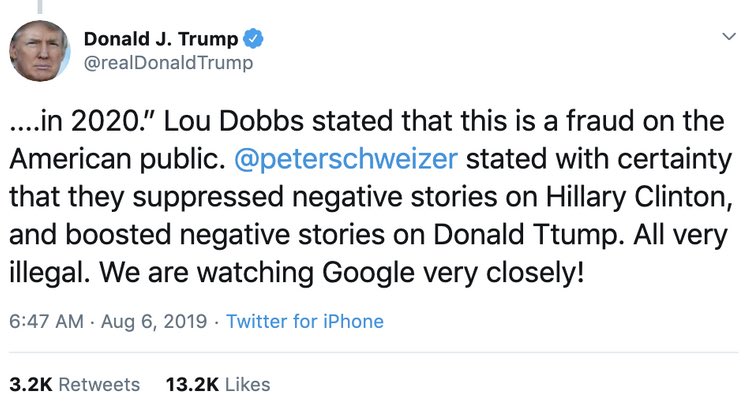
Donald Ttump stopped tweeting for a few hours and went to the game. (MLB commissioner Rob Manfred said Trump decided not to throw out the ceremonial first pitch "in order to make the fan experience as positive as possible".) Ttump was loudly booed the instant his name was announced and his orange face (Astros fan?) was shown on the Jumbotron in the third inning. The crowd also chanted, loudly, "LOCK HIM UP!!!"


Ttump's face turned from smug satisfaction to teeth-gritting annoyance the instant he realized he was being booed. There was also a Veterans For Impeachment sign behind the plate for a while. In the seventh inning, fans hung an "Impeach Trump" banner in right field. #LockHimUp, #BooTrump, and #TrumpBooed were trending during the game.

Tomorrow morning, the odds are good that Ttump will proclaim the crowd was cheering (no other president has ever received such applause at a World Series game, believe me, not even George Washington) and chanting "Four More Years!" (#FakeBoos) Or his anger will fester all night and he'll wake up pissed and start spewing at 6 AM. Or deep in his rotted soul, he'll convince himself the crowd was booing Melania.


Yordan Alvarez (3-for-3), Carlos Correa, and George Springer each went deep with a man on. Nationals starter Joe Ross (5-5-4-2-1, 78) was the victim of the first two blasts. Yuri Gurriel singled with one out in the second and Alvarez knocked a 2-1 pitch to the opposite field, where it landed in the first row. (Alvarez became the youngest AL player with a World Series homer since Tony Kubek of the 1957 Yankees. More importantly, a fan in the first row allowed the home run to hit him in the chest because he was holding a beer in both hands. He saved his beers AND got the baseball. Now THAT is an American hero!) In the fourth, Ross got the first two outs, but Alvarez singled through the shift into right and Correa donged to left-center.

This is probably the best time to mention that plate umpire Lance Barksdale had a horrible night (surprise!) judging pitches on the edge of the strike zone to his right, i.e., inside on lefties and outside to righties. There were a lot of pitches thrown in that area, on both sides of the "black", and Barksdale called a lot of them correctly, though judging by the ones he missed, he may have simply guessed much of the time and gotten lucky. It happens. But there is no question he blew a strike 3 call on Ross's 0-2 pitch to Correa. Pitch #3 should have ended the inning.


But the inning continued, thanks to The Human Element that everyone says is so essential. Of course, the most important human element at that exact moment was the fact that Joe Ross threw an inning-ending strike three, but, hey, baseball is so much better when the players don't decide who wins and loses, right?

The count was now 1-2. Correa fouled off two pitches, Ross threw a wild pitch, and Correa hit a home run, increasing the Astros' lead from 2-0 to 4-0. ... Don't ever think that umpires calling balls and strikes cannot change the outcome of a game. Cole was dealing, for sure, but Barksdale buried the Nationals with his inability to do his job.

And following in the footsteps of James Hoye, behind the plate in Game 4, Barksdale blew the outcome of the first batter of the game. Springer was behind 0-2, but fought back to a full count. Ross's eighth pitch of the at-bat was right on the line of the strike zone, but Barksdale ruled Ball 4.


The Nationals had a good opportunity in the second inning, trailing 2-0. Juan Soto and Howie Kendrick started the inning with singles, giving Washington runners at first and third. But Ryan Zimmerman could not check his swing on an outside curve and Victor Robles hit an 0-2 pitch into a double play.

Washington had only one baserunner over the next four innings until Soto homered in the seventh, cutting the Astros' lead to 4-1. Cole "walked" Zimmerman and struck out Robles on "called strike three". There are quotes around those words because Cole's pitches actually did neither of those things. Instead, Barksdale imposed his warped view of reality on us and we had to accept it.

The truth is, Cole struck out Zimmerman with Pitch #6 to end the inning ...


Which means Robles should not have come to bat and struck out, which he didn't do, of course (he walked, on Pitch #6).


On the blown call on Zimmerman, Astros catcher Martin Maldonado took a step or two towards the dugout before suddenly whirling around in disbelief. Washington catcher Yan Gomes did the same thing when Barksdale blew a 2-2 call on Michael Brantley in the top of the sixth. Tanner Rainer threw strike three and Gomes, confident that Pitch #6 was the first out, got up to fire the ball down to third. He also could not believe what he had heard.


A number of calls went against the Nationals in the later innings and that, coupled with the Astros tacking on three more runs, provoked a steady stream of annoyance from both the home dugout and the stands. ... Springer doubled to open the eighth and he eventually scored on Gurriel's two-out single. In the ninth, Maldonado singled and Springer crushed a 3-1 fastball to deep left, 435 feet away.

The Astros outscored the Nationals 19-3 in the three games (4-1, 8-1, 7-1), becoming the second World Series team to win three consecutive road games and allow one run or fewer. In 1968, the Tigers beat the Cardinals in Game 2 (8-1), Game 6 (13-1), and Game 7 (4-1).

The Astros' +16 run differential is tied for the largest by any team in three straight postseason road games with the Rays in the 2008 ALCS at the Red Sox (9-1, 13-4, 7-8), the Yankees in the 1961 World Series at the Reds (3-2, 7-0, 13-5), and the Boston Americans in the 1903 World Series at the Pirates (11-2, 6-3, 7-3).

The Nationals batted .307 (23-for-75) in Games 1-2, but only .175 (17-for-97) in Games 3-4-5. They were 7-for-21 with RATS in the first two games and only 1-for-21 in the last three games. They left 25 men on bases in their three losses and struck out 32 times.

The Nationals were held to three runs. Their fewest runs in any three-game span during the 2019 regular season was four, from May 5-7. And the last time the Nats were held to one run or fewer in three straight home games was August 6-9, 2016 (losing to the Giants 7-1, beating the Giants 1-0, and losing to Cleveland 3-1).

And so the clock on "Days Since A Washington Team Won A World Series Game At Home" will keep running. Game 5 was played on Day #31,433.

Cole has struck out 47 batters in this postseason, tying Cliff Lee (2010) for the American League record. Cole is also tied with NLers Randy Johnson (2001) and Josh Beckett (2003). Curt Schilling holds the record, with 56 for the Diamondbacks in 2001.

Cole has had four starts this October of 7+ innings, 7+ strikeouts and one or zero runs allowed. Schilling had five such starts in 2001.

In his last nine road starts (seven regular season, two postseason), Cole is unbeaten with a 0.89 ERA (six earned runs in 61 innings). ... Asked after the game if he lobbied manager A.J. Hinch for another inning, Cole said: "I was done."

José Altuve has reached base in 25 consecutive postseason games, tied with Pablo Sandoval and Boog Powell for the third-longest streak. Miguel Cabrera holds the record (31) and Chase Utley is second (27).

Altuve also has 24 hits this postseason, one shy of tying Darin Erstad's AL-record of 25 for the 2002 Angels. The Kung Fu Panda holds the "all-time" record with 26 hits for the 2014 Giants.

In his last 22 postseason games in Houston, Altuve is hitting .400/.438/.800, with 10 home runs, 24 runs scored, 20 RBIs, and a 1.238 OPS.

Gerrit Cole / Max Scherzer Joe Ross

Max Scherzer will not start Game 5, because of neck and back spasms.

Joe Ross pitched two shutout innings in Game 2. He finished the season with a 5.48 ERA, but in August/September, he posted a 2.75 ERA and a .674 opponents OPS in eight starts.

Nationals manager Dave Martinez:
Yesterday [Saturday] he had a little bit of spasms in his right trap and neck. They treated it. He woke up today a lot worse. And if you all know Max, obviously he pitched with a broken nose, he's been hurt before, he's gotten through things. When he comes in and says he's hurt this bad, he's hurt. And I can tell you now he's very upset.
Scherzer:
I woke up this morning completely locked up. I couldn't even dress myself. I've pitched through so much crap in my career that would be easy to pitch through at this point. This is literally impossible to do anything with. I'm just hoping that the doctors are right and something could be possible for Game 7.
Martinez expects Stephen Strasburg will start Game 6 on Tuesday in Houston, which could also feature Scherzer in relief "depending on where we're at". Martinez added: "If we go to Game 7, Max starts Game 7."


The World Series has become a best-of-three: Tonight's game in Washington and two games on Tuesday and Wednesday (if necessary) in Houston.

Richard Justice, mlb.com:
The Astros are 65-24 at home including the postseason, and no matter what happens in Game 5 on Sunday, they're again World Series favorites.
I don't agree with that. The Nationals were only 43-38 on the road during the regular season, but they are 6-1 in the postseason, and the Astros still have to face Stephen Strasburg in Game 6. And as a man named Cabin once said: "Anything can happen in a Game 7."

Max Scherzer threw 112 pitches in only five innings in Game 1, but the Nats have relievers Sean Doolittle and Daniel Hudson rested and ready.

Gerrit Cole has logged 242 innings this season (including the postseason) and suffered his first loss in five months in Game 1. Tonight is his final start of the season, though it may not be his last appearance (see Chris Sale, 2018).
I hope I go home with nothing left in the tank. So whether [Sunday] is the last time I pitch or I get the opportunity to pitch another time after that, I just hope I'm absolutely dog tired by the time I get home.

October 26, 2019

WS4: Astros 8, Nationals 1

Astros    - 200 200 400 - 8 13  1
Nationals - 000 001 000 - 1  4  0
Jose Urquidy (5-2-0-0-4, 67) pitched five shutout innings, retiring 15 of the 17 batters he faced, and Alex Bregman belted a grand slam as the Astros evened the World Series at two wins apiece, guaranteeing the 2019 season will end in Texas. The question for Sunday is: Which team will need only one victory in Houston to replace the Boston Red Sox as baseball's champions?

Bregman (3-for-5) finished with five runs batted in, as he also singled home the Astros' first run, off Nationals starter Patrick Corbin (6-7-4-2-5, 96). The night began with plate umpire James Hoye blowing an important call on the very first batter, ringing George Springer up on what was actually Ball 4:


Houston scored two runs despite the blown call, as the next five Astros reached base. Jose Altuve (2-for-5) grounded a single into left, Michael Brantley (3-for-5) singled to center, and Bregman also lined a single into center, for one run. Yuri Gurriel reached base hitting a smoking line drive to third. Anthony Rendon of the Nats made an impressive backhand grab, half-turned to his right to look at second base, then turned around to his left and fired to first. The extra half-turn meant his throw was late and the Astros led 2-0. Carlos Correa walked on a 5-1 pitch (more eagle-eyed work from Hoye, whose seeing-eye dog is quite handsome). Washington got a break when Robinson Chirinos hit into a double play.


Urquidy, who pitched 2.2 innings and struck out five Yankees in Houston's pennant-winning game, cruised through his five innings, allowing only two baserunners and never throwing more than 15 pitches in an inning (11-13-14 14-15). Rendon singled with two outs in the first and Yan Gomes doubled to lead off the third. Corbin bunted Gomes to third, but the top of the Nats' lineup came up short as Trea Turner grounded to first and Adam Eaton popped to shortstop.

Urquidy had pitched in only 11 major league games before tonight (45.1 innings). There have been only two pitchers who made a World Series start after fewer appearances: Marty Bystrom of the Phillies (seven games, 41.1 innings) in Game 5 in 1980 and Steven Matz of the Mets (eight games, 45.1 innings) in Game 4 in 2015. (All three starters pitched five innings!) Urquidy is also the second pitcher since the LCS began in 1969 to have his first career postseason start be a scoreless outing in the World Series, joining Jon Lester, who did it for the Red Sox in the clinching game of the 2007 World Series at Colorado.

Correa walked to start the fourth and Chirinos clocked a changeup 404 feet out of the park to left-center for a two-run dong and a 4-0 lead. (For those who keep track of such things, Chirinos is the sixth catcher to homer in consecutive World Series games and the first in 37 years (Mickey Cochrane 1930, Bill Dickey 1939, Roy Campanella 1955, Gene Tenace 1972, Ted Simmons 1982).) Jake Marisnick singled and stole second, but was stranded at third.

Once Urquidy was gone, the Astros came briefly to life. Pinch-hitter Gerardo Parra walked against Josh James, as did Eaton one out later. Will Harris came in and got drilled by his first pitch when Rendon hit it right back to the mound. The ball caromed off Harris to first baseman Gurriel, who gloved it on the infield grass, but had no play. Juan Soto grounded out to Gurriel and a run scored. Howie Kendrick struck out.

Tanner Rainey relieved Corbin in the top of the seventh. He walked Kyle Tucker on five straight balls (one of which was somehow judged to be a strike by Hoye).


Rainey also walked Springer and, after getting a fly to right, was pulled. Fernando Rodney took over and ... well, let's just say Rodney did not break out his bow-and-arrow bullshit after his performance in this inning.

Brantley greeted Rodney with a single, Bregman golfed a fastball down the left field line and over the wall, and the game was effectively over. (It was the 20th grand slam in World Series history.) But Rodney decided to draw some more boos out of the Nats crowd by walking Gurriel and then walking Correa and then (after a force play at second) walking Marisnick. And then Rodney walked ... off the field. Wander Suero got the third out.

The Nationals put two men on in the home half of the seventh, but Turner stranded them by grounding out to first, as Gurriel slid into the bag, glove-first, to beat the runner. (Fox had some nice camera work on the replays.) An error and a walk put two runners on in the eighth, but Javy Guerra retired Howie Kendrick and Ryan Zimmerman. A two-out walk was all Washington could muster in the ninth.

This is only the fifth World Series in which the road team has won each of the first four games. The other four: 1906, 1923 (though the games were played in the same city), 1986, and 1996. The Red Sox won the final two games of the 2018 World Series on the road in Los Angeles, so the current road winning streak is six games. The last time there was a streak that long was 1949-1950 (the final four games in 1949 and the first two games in 1950).

Also: Someone left a comment in defense of Brandon Taubman and the many players who had assaulted women . ... Seriously. ... Have fun.

Jose Urquidy / Patrick Corbin

October 25, 2019

WS3: Astros 4, Nationals 1

Astros    - 011 011 000 - 4 11  0
Nationals - 000 100 000 - 1  9  2
The necessity of earning a living prevented me from watching almost all of Game 3. I saw the top of the first, the last batter in the bottom of the sixth, and the bottom of the ninth. This is what I saw:

Washington's Victor Robles made an amazing catch on the warning track in deep center for the first out of the evening. George Springer had reached on an infield single and Jose Altuve made a bid for extra bases off Aníbal Sánchez.

In the other two moments I watched, plate umpire Gary Cederstrom made blatantly bad calls, which made me wonder about his overall performance; could he have blown calls only when I caught a batter or two? In the bottom of the sixth, Adam Eaton batted against Will Harris as the potential tying run. Houston led 4-1, but the Nationals had two men on with two outs. Harris threw a high pitch on 0-2 and Eaton tried to check his swing, but did not. However, Cederstrom said No, it was a ball. Eaton ended the inning by grounding out to first, so that bad call had no effect on the game.

Roberto Osuna pitched the bottom of the ninth for the Astros. His control initially seemed a bit off - and he received a gift from Cederstrom on his first batter. Osuna threw a 3-1 pitch that was just low enough to be out of the strike zone. The pitch was borderline and clocked at 97 mph, and Cederstrom called it a strike. Turner fouled a pitch off and then flew out to deep right-center. Eaton singled on a 2-0 pitch. The Nats could well have had the first two men on - perhaps they should have - and then who knows? But Osuna got Anthony Rendon on a first-pitch foul popup to the catcher and froze Juan Soto (on his 21st birthday) with two nasty pitches, an inside fastball right on the black for called strike one and a 99 mph fastball in the low/far corner of the zone for a game-ending called strike three.


Anthony Castrovince, mlb.com:
Houston got on the board in the second inning, when Josh Reddick blooped a base hit to shallow left to score Carlos Correa, who had doubled, from second. Juan Soto fielded the ball and heaved a wayward throw toward home plate, allowing Reddick to skip to second base, and the 21-year-old birthday boy would have another fielding foible in the third, when he misplayed a ball in the left-field corner to turn a José Altuve leadoff double into three bases instead. Michael Brantley grounded an infield single off Sánchez's glove to score Altuve and make it 2-0.

The Nats responded in the fourth when Ryan Zimmerman drew a leadoff walk from Zack Greinke and Victor Robles ripped and skipped a triple past third baseman Alex Bregman to make it 2-1. But Robles was stranded after Martinez opted not to pinch-hit for Sánchez, who bunted for strike three before Greinke made a nice play on a short grounder from Trea Turner to end the threat.

Robles was one of 10 baserunners the Nats stranded just in the game's first six innings. When they had two runners in scoring position with two outs in the fifth, Hinch replaced Greinke with young Josh James, who got Zimmerman swinging on an 89 mph changeup inside. When the Nats had two on with one out in the sixth, Will Harris calmly struck out Turner and compelled a groundout from Adam Eaton. The Nats' frustration was amplified by the sixth-inning loss of catcher Kurt Suzuki to a hip injury that has his status uncertain for Game 4.

The Astros, on the other hand, had added valuable insurance against Sánchez on a Brantley RBI single in the fifth and Chirinos' 108.4 mph solo dinger off the left-field foul pole in the sixth.
An article featuring "13 Facts, Figures About World Series Game 3" began thusly: "Given that only one team in baseball’s postseason history has come back from a 3-0 deficit, Friday night’s World Series Game 3 in Washington, D.C., was essentially a must-win for the Astros." ... It will never get old. [However, everyone needs to be taught the proper way to reference it: "a 0-3 deficit", not 3-0.]
The Astros are trying to become the 14th team all-time to come back from a 2-0 deficit in a best-of-seven postseason series, and the first to do so in the World Series since 1996. In all series with the current 2-3-2 format, teams that have taken Game 3 after falling behind 2-0 have come back to win the series 12 of 43 times (28%).

The Nationals entered Game 3 with an eight-game winning streak this postseason, which was tied for the longest single-postseason streak with the 2014 Royals, 2005 White Sox and 2004 Red Sox. Friday's loss snapped that streak, meaning they'll remain tied with those three other teams for the record. Washington had also won 18 of its past 20 games overall, which tied for a franchise-best dating back to its Montreal era. ...

The Astros entered Game 3 having hit just .127 with runners [at second and/or third] since the beginning of their American League Championship Series matchup against the Yankees. But they turned that around in a big way Friday, going 4-for-10 with runners [at second and/or third] and notching their first three runs via [RATS] hits.

Meanwhile, the Nationals were 0-for-10 with runners [at second and/or third] in the game, after going 7-for-21 in the first two games of the series. Washington became the first team since the 2008 Phillies to go hitless in 10 or more at-bats with runners [at second and/or third] in a World Series game -- though it's worth noting that the Phillies won that game, going 0-for-13 with [RATS] to set a World Series record along the way. [The Nationals had only two games all season in which they finished a game at least 0-for-9 (July 24 against the Rockies, and September 13 against Atlanta.]

José Altuve remains scorching hot. After going 2-for-5 with a pair of doubles in Game 3, Altuve's batting line this postseason stands at .362/.413/.724 with six doubles and five homers in 58 at-bats. Altuve's 1.137 OPS would be the highest in a single postseason (min. 50 AB) since David Ortiz finished at 1.206 in his magical October 2013.

[Robinson] Chirinos' dinger made the Astros the second team to have two different catchers homer in the same World Series, following Giants backstops Ed Bailey and Tom Haller against the Yankees in 1962. Chirinos' teammate Martín Maldonado went deep in Game 2. Per STATS, this is the first World Series to feature three different catchers homering overall, including Kurt Suzuki's go-ahead homer off Justin Verlander in Game 2.

Will Harris picked up five huge outs for Houston, stranding runners on first and second in the sixth and then retiring the heart of the Nationals' lineup in order in the seventh. ... The right-hander has yet to allow a run in 8.1 innings this postseason. Harris now has nine scoreless appearances this postseason. There have been 12 times in which a pitcher has finished a single postseason with at least nine appearances in a single postseason without allowing a run. The record is 11 by Jeremy Affeldt for the 2014 Giants.
Chad Thornburg, mlb.com:
Teams that win the first two games in a best-of-seven postseason series .... have prevailed in 71 of 84 instances, but all isn't lost for the team facing an 0-2 deficit ...

The 13 teams that overcame those long odds have proved, time and again, that no two-game lead is safe. Even an 0-3 deficit has been conquered once, by the curse-busting Red Sox against the Yankees in the 2004 American League Championship Series.

However, of the 25 teams to lose Games 1 and 2 at home in a best-of-seven series, only three have rallied to win the series. ...

Of the 13 comebacks overall, 10 have come in the World Series, while three were in a League Championship Series ...

Below is a closer look at that historic 2004 Boston team, as well as the other 12 instances of 0-2 comebacks in a seven-game playoff series:

2004 ALCS: Boston Red Sox
Lost Games 1 and 2 on the road, 3 at home, won in seven games

Boston's comeback against the Yankees in 2004 may be the most impressive series reversal on this list as the Red Sox became the first team in MLB history to overcome an 0-3 deficit in a seven-game series. The Yankees were on the verge of a sweep in Game 4, bringing a one-run lead into the ninth inning. But Dave Roberts' clutch steal and Bill Mueller's game-tying single against All-Star closer Mariano Rivera sent the game to extras, and David Ortiz capped Boston's comeback with a walk-off homer in the 12th inning. Game 5 also went down to the wire, and again, Ortiz was the hero, hitting a walk-off single in the 14th inning en route to series MVP honors. Game 6 was Curt Schilling's legendary "Bloody Sock" game, in which Schilling pitched seven innings of one-run ball with an injured ankle. Boston clinched the series with a 10-3 victory in Game 7 and defeated the Cardinals in the Fall Classic for the franchise's first championship since 1918.
Zack Greinke / Aníbal Sánchez

Aníbal Sánchez is the only pitcher in major league history with multiple postseason starts of at least six no-hit innings:
2013 ALCS Game 1: 6.0 hitless innings vs Red Sox (6-0-0-6-12, 116)
2019 NLCS Game 1: 7.2 hitless innings vs Cardinals (7.2-1-0-1-5, 103)
In 2013, at Fenway Park, the Tigers bullpen took the no-hitter into the ninth inning before Daniel Nava singled with one out. That was Boston's only hit in a 1-0 loss. In Game 2, a grand slam by David Ortiz! David Ortiz! David Ortiz! led Boston to a 6-5 win, and they won the pennant in six games, en route to yet another championship. In 2019, the Cardinals finished with one hit and lost 2-0. St. Louis also lost the next three games.

In 2012, Zack Greinke started three consecutive games for the Brewers. On July 7, he was ejected after facing two Astros batters (0-2-1-0-0, 4*). On July 8, he faced the Astros again (3-5-3-2-5, 66). Then, after the All-Star Break, he started against the Pirates on July 13 (5-7-6-2-6, 97).

*: Despite throwing the fewest pitches of Milwaukee's seven pitchers and allowing only one of Houston's six runs, Greinke was deemed the losing pitcher. #killtheloss

It was the first time in 105 years that a major league pitcher started three consecutive games in a single season. In 1917, Red Faber of the Chicago White Sox started both games of a September 3 doubleheader (G1: 4.2-11-5-0-0, 23 batters; G2: 1.1-4-4-3-0, 10 batters) and the game on September 4 (9-16-6-0-1, 44 batters).

October 23, 2019

WS2: Nationals 12, Astros 3

Nationals - 200 000 631 - 12 14  2
Astros    - 200 000 001 -  3  9  1

The Astros may have played their last game in Houston until March 26, 2020. The Nationals broken the game open in the seventh, sending 10 men to the plate, as the lower half of the lineup did most of the damage. Then Washington tacked on four more runs just to see how many disgusted fans they could drive out of the park before the final out.

The Nationals scored 17 runs in the first two games, the most by a road team in the World Series in nearly six decades. In 1960, the Yankees scored 20 runs in the first two games in Pittsburgh. New York outscored the Pirates 55-27 in that delightful World Series, but lost in seven games! Thank you, Bill Mazerowski!

Five Washington players had two hits and four players scored two runs. The Nationals hit three home runs, one in each of the last three innings. Kurt Suzuki snapped a 2-2 tie by leading off the seventh inning against Justin Verlander (6-7-4-3-6, 107) with a dong. Suzuki (the first player born in Hawaii to hit a WS HR) had been 2-for-25 in the postseason before that at-bat. Asdrubal Cabrera struck out in his first three trips to the plate, but then drove in three runs with two singles.

The Nats were up 2-0 before the Astros had recorded an out. Verlander began the game by walking Trea Turner on four pitches, only the third time in Verlander's career (12,888 batters at that point, as a starter) that he threw four straight balls to the first batter of a game. Adam Eaton lined a single past the third baseman. Anthony Rendon brought both runners home by knocking an 0-2 pitch off the left field wall for a double. Verlander has now allowed nine first-inning runs this postseason, the most for any pitcher in any postseason in MLB history; that factoid is presented with the necessary caveat that a team now can potentially play 20 postseason games when teams before 1969 played a maximum of only seven.

Stephen Strasburg (6-7-2-1-7, 114) also allowed two runs in the first. Jose Altuve had doubled with one out, but he was thrown out trying to steal third on the first pitch to Michael Brantley. Strasburg wasahea dof Brantley 0-2, but the count went full and the Astros left fielder singled to center. Then Alex Bregman drilled an inside changeup over the wall in left-center, tying the game at 2-2.

And that's the way the score remained for a while. The Astros had runners on first and third with two outs in the third (thanks to an error and a single), but Bregman grounded into a force play. Yuri Gurriel doubled with one down in the sixth, but Strasburg intentionally walked Yonder Alvarez and got the next two hitters, Carlos Correa, on a popup, and pinch-hitter Kyle Tucker, on a called third strike.

Verlander had tamed the Nats for five innings, allowing only one baserunner past first. (He also threw a ball that caromed off his left shin.) But Suzuki gave Washington the lead and when Verlander walked Victor Robles, he was pulled. Ryan Pressly walked Turner before getting two quick outs, a sacrifice bunt that moved the runners to second and third and a popup to shallow center. Juan Soto was walked intentionally - Houston's first intentional walk of the 2019 season! - and that apparently caused the Astros' roof to fall in.

Howie Kendrick grounded a ball to Bregman's left. The Houston third baseman bobbled it and never made a play. For unknown reasons, it was ruled a single. 4-2. Cabrera lined a single to center, bringing in two more runs. 6-2. Pressly threw a wild pitch, again putting Nats at second and third. Ryan Zimmerman tapped a slow roller towards third. Bregman ran in, barehanded the ball, and threw it wildly past first base. 8-2. Josh James was asked to get the third out and he did.

Robles began the eighth by striking out - but reaching first base on a passed ball. After Turner fanned, Adam Eaton went deep. 10-2. Rendon made the second out, but Soto walked and Kendrick singled. Hector Rondon came in and gave up a run-scoring single to Cabrera. 11-2. Michael A. Taylor, who had taken over in center in the bottom of the eighth, saw one pitch from Chris Devenski in the ninth - and he cranked it over the left-center fence. 12-2.

Martin Maldonado hit a solo shot with one out in the bottom of the ninth, which prompted more cheering from the home crowd that I expected, since the Astros were still down by nine runs with two outs remaining. Houston put two more runners on, but Jake Marisnick grounded out to end the game.

Fernando Rodney relieved Strasburg in the seventh. At 42 years, 219 days, he's the oldest reliever to pitch in a World Series game in 32 years (Joe Niekro (42-349), 1987 Twins, Game 4).

The Nationals have won eight consecutive postseason games, tying a major league record first set by the 2004 Boston Red Sox. Six of the eight wins have been on the road. The Nats will be home for the their next three games, however. They can avoid another trip to Texas by simply winning two of the next three games.

Teams that have taken a 2-0 series lead by winning both games on the road have won 10 of 13 World Series.

Stephen Strasburg / Justin Verlander

The Astros left 11 men on base in Game 1, including the bases loaded in both the third and eighth innings.

Houston led the major leagues in batting average, on-base percentage, slugging percentage, highest walk rate, Weighted On-Base Average, and wRC+ this year, but they have a weak .213/.293/.362 batting line this month. With RATS, the Astros are hitting .185/.248/.348.

Mike Petriello writes that .596 RATS OPS is "more or less the line that Baltimore's Chris Davis put up this year, .179/.276/.326, .601. That's not what you want." He adds that "it's one of the weakest postseason lines with runners in scoring positions that we've ever seen".

Since 1969, there have been 88 postseason teams with at least 100 plate appearances with runners on base. The Astros (.185/.248/.348/.596) are: 87th in average, 88th in on-base, 71st in slugging, and 86th in OPS.

Among those 88 teams, the Astros' 260-point dropoff in OPS from the regular season (.856) to the postseason (.596) is the largest of all time:
-.260 (2019 Astros     from .856 to .596)
-.255 (1995 Mariners   from .854 to .599)
-.181 (1974 Dodgers    from .753 to .572)
-.164 (2013 Cardinals  from .865 to .701)
-.164 (2015 Blue Jays  from .839 to .675)
Yonder Álvarez (.107/.219/.107 in his last eight games), Alex Bregman (.091/.333/.182 with RATS this October), and Yuli Gurriel (.229/.255/.333 in October) are three notable culprits.